Bastille Day at Le Lioran: Stage 10 Returns to the Mountain That Beat Pogačar — Can It Happen Twice?
Last Updated: 1:28 pm CEST - Monday, 13 July 2026 | 39 minutes read time.
Tour de France 2026 Stage 10 takes place on Tuesday, July 14, Bastille Day, covering 166.6 km from Aurillac to Le Lioran through the volcanic heart of the Cantal, with seven categorised climbs and roughly 3,900 metres of total elevation gain. It is the first stage back after the Tour’s opening rest day, and it arrives in a finish town that already has one of the most dramatic chapters in recent Tour history attached to it.
This is a short stage by Grand Tour standards, but don’t mistake brevity for mercy. Nearly all of the day’s climbing is crammed into the final 100 kilometres, building through a string of category 2 and 3 passes before the Puy Mary-Pas de Peyrol and the brutally steep Col de Pertus decide who arrives at Le Lioran with anything left to fight for. Riders return from their first rest day not knowing whether they’ll find fresh legs or rusty ones and on a stage built like this, the answer matters immediately.
Coming Off Stage 9: Van der Poel Finally Delivers, and the Rest Day Resets the Board
Stage 9 answered its own question in the most fitting way possible. Mathieu van der Poel, who’d spent the opening week admitting, almost apologetically, that this hadn’t been enjoyable, won from the breakaway into Ussel, holding off Tobias Halland Johannessen and Tom Pidcock in the finishing move. It’s his first win of this Tour, and it arrives after a week spent working lead-out duty for Jasper Philipsen rather than chasing results of his own. Johannessen, for his part, admitted afterward that trying to out-sprint Van der Poel head-on was “a little stupid”, the kind of honest post-race quote that tells you everything about how that finish actually played out.
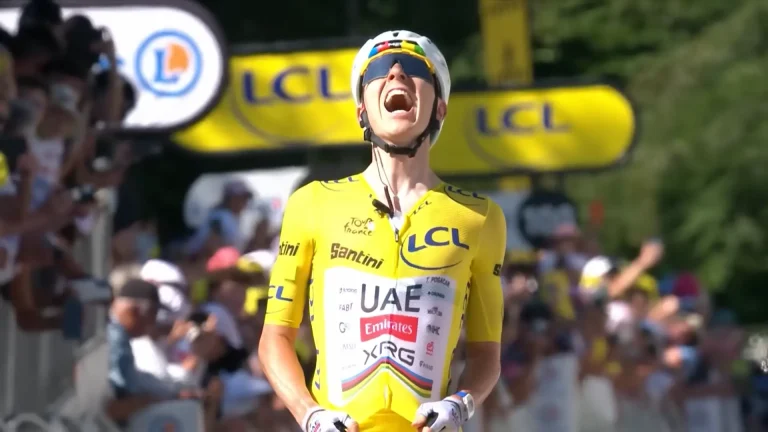
Behind the breakaway, nothing changed at the top. Tadej Pogačar came through the heat-shortened stage safely, still in yellow, still 2:42 clear of Jonas Vingegaard, exactly the quiet, risk-free day UAE Team Emirates-XRG wanted heading into the rest day. Isaac del Toro remains third and in white.
That rest day has now happened. Stage 10 is the first test of what a day off actually did for legs that had just survived a red heat alert. Some riders will come back sharper; others, as the article’s own section on rest-day uncertainty explains below, will feel exactly the opposite, and on a stage this back-loaded, the difference shows up fast.
One more thread worth knowing before Stage 10: the mood inside Red Bull-BORA-hansgrohe has been tense since the Tourmalet stage, with Evenepoel voicing frustration at co-leader Florian Lipowitz afterward. Whether that’s resolved or simmering going into Bastille Day is one of the smaller subplots worth watching over the next 36 hours.
What Is Tour de France 2026 Stage 10?
Stage 10 is a 166.6 km stage run on July 14, taking riders from Aurillac to Le Lioran through the volcanic Cantal region, with seven categorised climbs totalling roughly 3,900 metres of elevation gain. It’s the first stage back after the Tour’s opening rest day, and despite being shorter than most of the route’s other mountain stages, it concentrates almost all of its difficulty into the final 100 kilometres, a structure that punishes poor pacing more than almost any other stage in this Tour.
The Massif Central doesn’t offer anything close to the towering, single-defining-mountain drama of the Alps or Pyrenees. What it offers instead is attrition: a relentless sequence of climbs that wears riders down cumulatively rather than through one decisive effort. Coming directly off a rest day adds genuine uncertainty to how legs will respond; some riders emerge refreshed, others arrive rusty, and a stage this demanding tends to reveal which is which almost immediately.
How to watch the Tour de France 2026 Stage 10 live
Stage 10 Date, Distance, and Start Times
Stage 10 runs on Tuesday, July 14, 2026 — Bastille Day, France’s national holiday — covering 166.6 km. The race starts at 13:10 CEST from Aurillac, with an estimated finish around 17:24 CEST in Le Lioran.
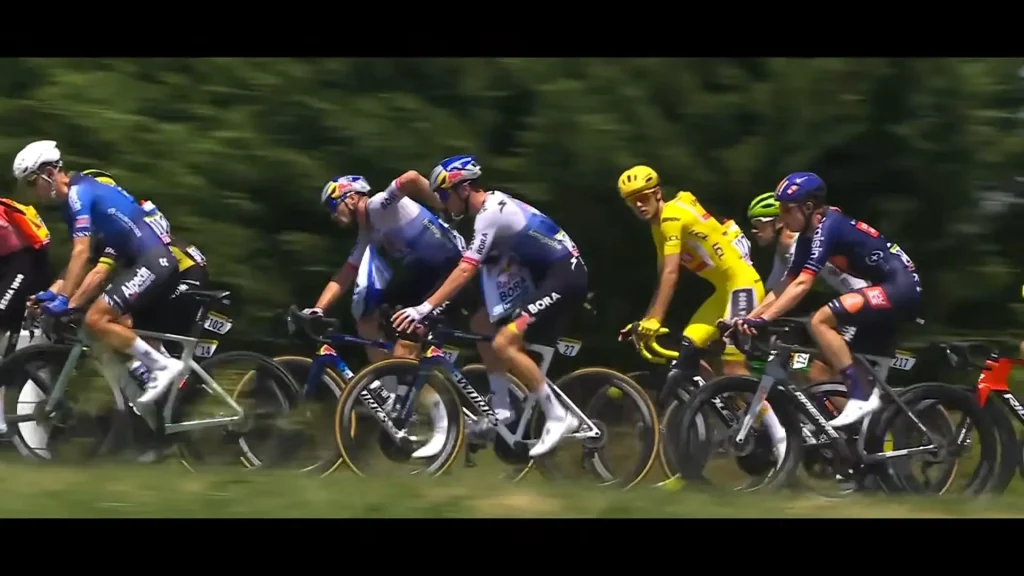
For viewers outside continental Europe: a 13:10 CEST start translates to roughly 12:10 BST in the UK, 07:10 EDT on the US East Coast, and 04:10 PDT on the West Coast. Coverage runs on Eurosport and HBO Max across most of Europe, with NBC Sports and Peacock carrying the race in the United States.
Three viewing tiers, if you can’t watch the whole thing:
- Full stage: join at the start — Bastille Day breakaway fights are usually fiercer than normal, and this terrain rewards an early, well-formed move.
- Decisive phase only: join from ~15:50 CEST / 14:50 BST, as the race hits the Puy Mary–Pertus–Font de Cère sequence.
- Finish only: join from ~16:45 CEST / 15:45 BST for the Col de Pertus onward — steep enough, late enough, to be worth watching alone even if you miss everything else.
How to watch: UK viewers need TNT Sports or HBO Max for live coverage — Channel 5 carries free highlights only, and ITV no longer holds Tour rights. Elsewhere: Eurosport across most of Europe, NBC/Peacock in the US, SBS (free) in Australia. See the complete regional live-streaming guide to watch TDF 2026.
Tour de France 2026 Stage 10 Route: Full Aurillac to Le Lioran Course Guide
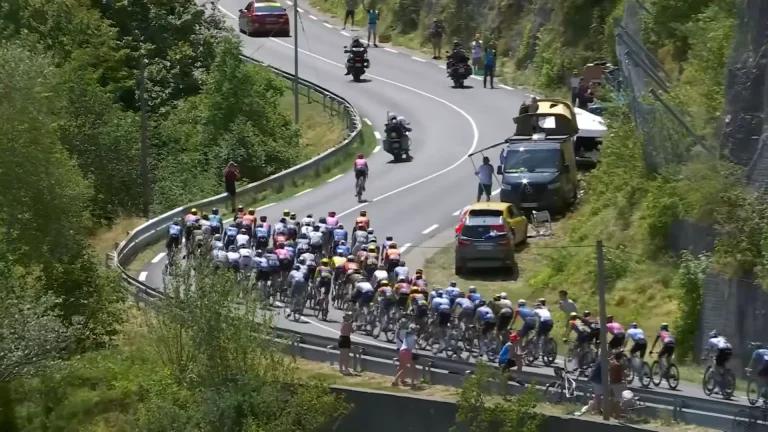
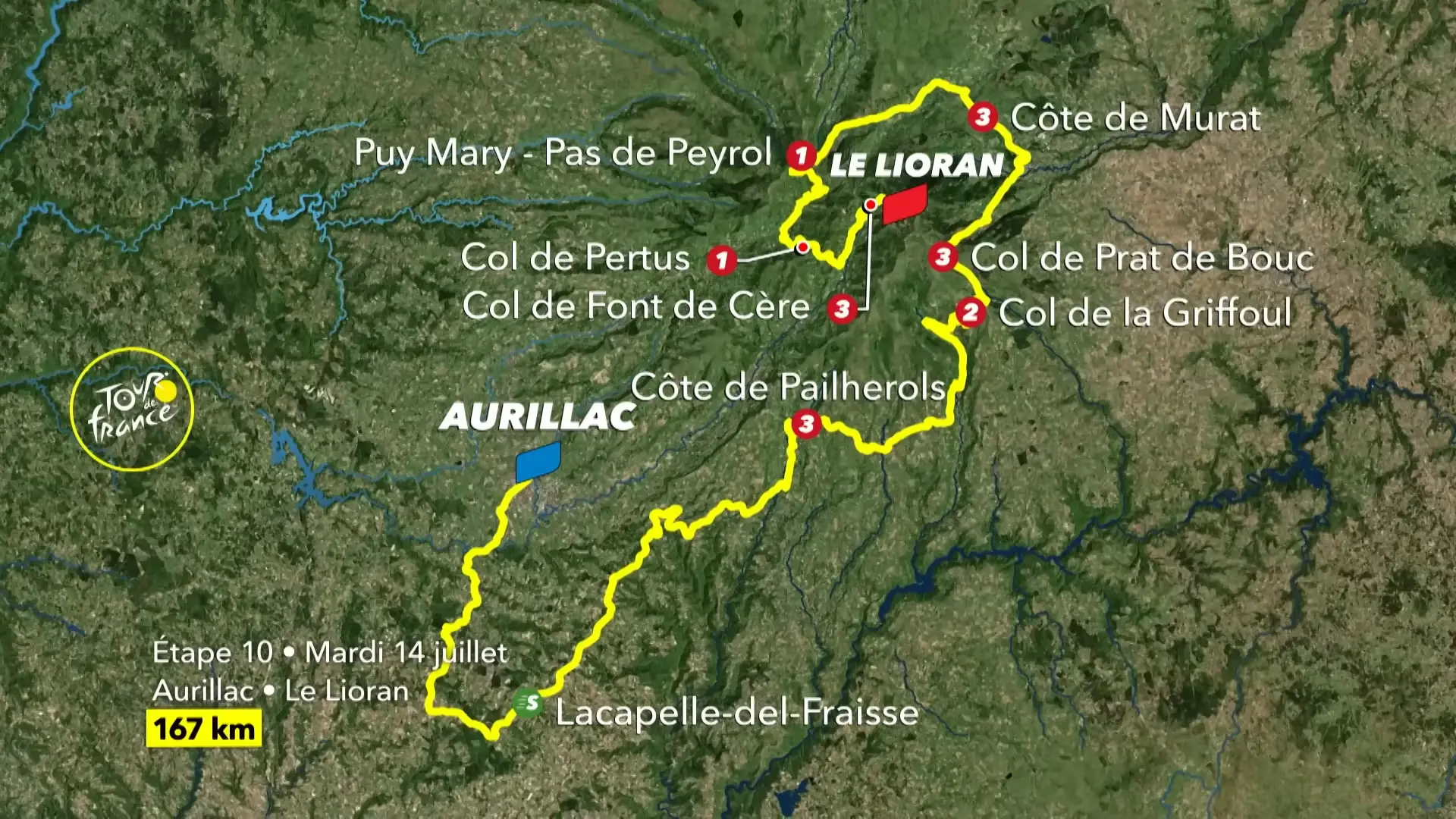
The route runs from Aurillac through gently rolling terrain for the opening 65 kilometres before climbing begins in earnest with the Côte de Pailherols, building through a string of categorised passes around Murat before the decisive final sequence: the Puy Mary-Pas de Peyrol, the brutally steep Col de Pertus, and the Col de Font de Cère, leading into the finish at Le Lioran.
Aurillac: Fifteen Tour Visits and a City on the River Jordanne
Aurillac, sitting on the River Jordanne, carries genuine Tour pedigree of its own. La Grande Boucle has visited the town fifteen times, most recently in 2024, when the stage from Aurillac set off toward Villeneuve-sur-Lot. That 2024 history is entirely separate from Le Lioran’s more recent fame, two different chapters of Tour history that happen to sit close together on the 2026 route, but shouldn’t be conflated. Aurillac’s standing as a fifteen-time host city makes it one of the more experienced stage towns the 2026 route visits, even if it rarely gets the attention of the race’s more glamorous Alpine or Pyrenean départs.
The Opening 65km: Deceptively Gentle Rolling Terrain
The stage opens with genuinely gentle, rolling terrain for the first 65 kilometres, the kind of start that could lull a less attentive viewer into expecting a calm day. It isn’t one. This opening section serves as little more than a long approach to the difficulty that follows, and the relatively flat early kilometres are precisely what allows the stage’s total distance to stay short while still packing in nearly 3,900 metres of climbing in the back half.
Côte de Pailherols and the First Warning Signs
At kilometre 68, the Côte de Pailherols arrives, 3 km at an average gradient of 7.2%, rated Category 3. It’s a short, sharp signal that the easy part of the day is over, even though what follows will dwarf it in both length and consequence.
Col de la Griffoul, Prat de Bouc, and Côte de Murat: The Warm-Up Block
A trio of climbs forms the stage’s midsection. The Col de la Griffoul (5.9 km at 6.7%, Category 2, km 97.3) has been described by one route analyst as “the great unknown” of the stage, a less-documented climb compared to the Cantal’s more famous passes, but a genuine Category 2 test in its own right. The Col de Prat de Bouc (3.1 km at 6.5%, km 103.8) follows almost immediately off the descent, with the Côte de Murat (5.2 km at 5.3%, km 118.8) completing the block. Despite their individual respectability, all three are, in the context of what comes next, essentially warm-ups for the stage’s real finale.
Puy Mary-Pas de Peyrol: The Cantal’s Most Famous Climb
At kilometre 135.7, the race reaches the Puy Mary-Pas de Peyrol, 7.8 km at an average gradient of 6%, with the final 2.2 kilometres ramping up sharply to 8.8%. Rated Category 1, it’s the most famous single climb in the entire Cantal massif, and for good reason: the Pas de Peyrol is the highest road pass in the Massif Central at 1,589 metres, sitting just below Puy Mary’s 1,787-metre summit. This is the climb where Tadej Pogačar launched his now-legendary long-range attack in 2024, on a different stage, as detailed further below, and it remains the kind of ascent capable of producing exactly that sort of decisive move in 2026.
Col de Pertus: The Steepest Test, 14.6km From the Line
After an 8-kilometre descent from Puy Mary, the road turns immediately back uphill for the Col de Pertus — 4.4 km at an average gradient of 8.5%, the steepest sustained climbing of the entire stage, rated Category 1. The summit arrives with 14.6 kilometres still remaining to the finish, making this the last realistic launching point for a significant GC move before the stage’s final climb.
Col de Font de Cère and the Run Into Le Lioran
A six-kilometre descent leads into Saint-Jacques-des-Blats, after which the road rises again almost immediately, though only the final 3.3 kilometres count toward the King of the Mountains classification on the Col de Font de Cère, averaging 5.8%. From the summit, it’s 2.5 kilometres to the finish in Le Lioran: the road drops slightly before the final few hundred metres tilt back up at 6%, an uphill finish that rewards anyone with genuine power left rather than pure sprint speed.
Tour de France 2026 Stage 10 Elevation Profile: 3,900 Metres Packed Into the Back Half
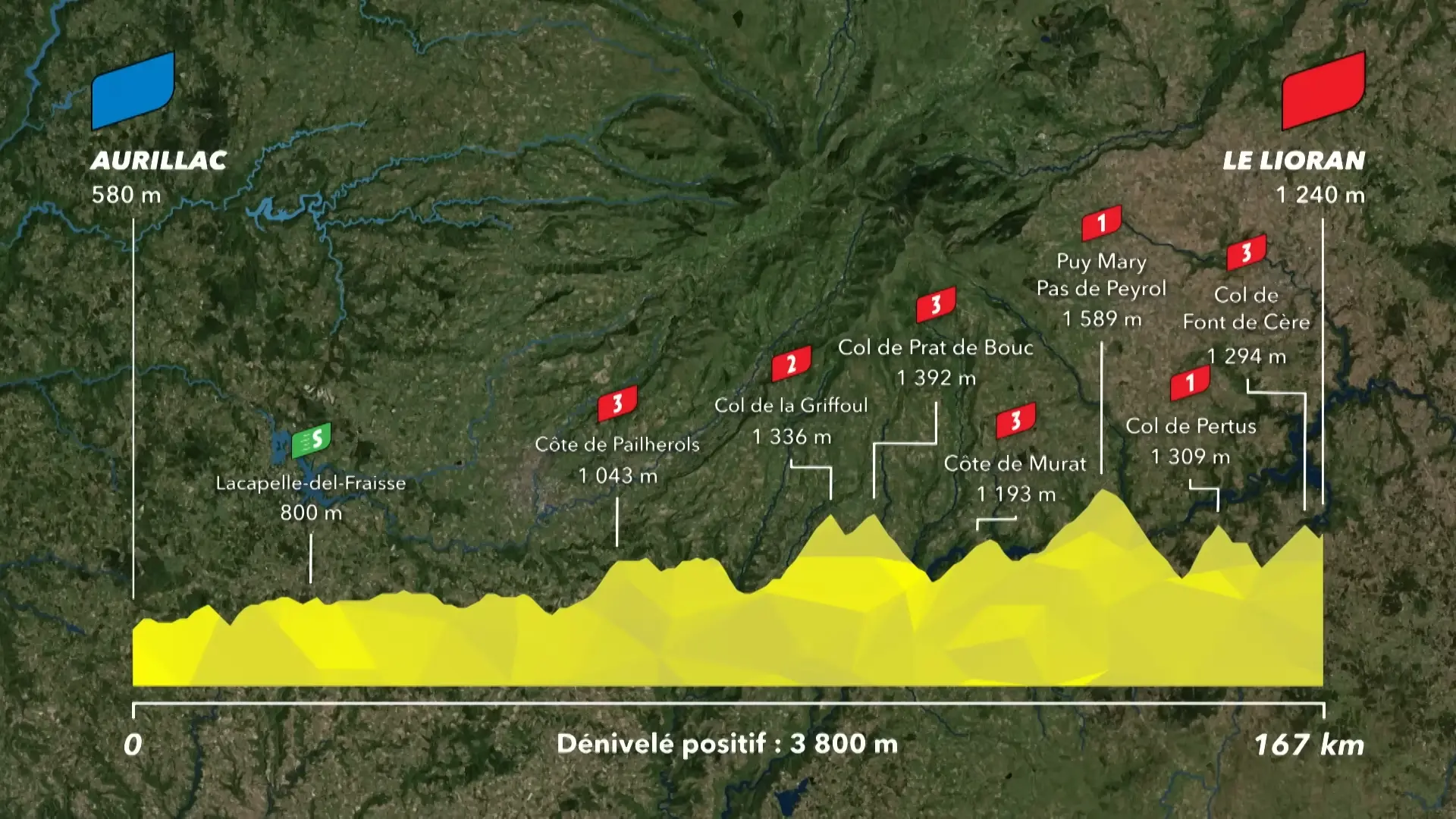
Stage 10 gains roughly 3,900 metres of total elevation across just 166.6 km, a markedly steeper average gradient of difficulty-per-kilometre than several of the Tour’s longer mountain stages, precisely because the first 65 km offer almost nothing in the way of climbing. The bulk of the elevation gain is concentrated into the stage’s second half, building toward the Puy Mary-Pertus-Font de Cère sequence that decides the day.
All Seven Climbs: Stage 10 Data Table
| Climb | Category | Length | Avg. Gradient | KM Mark |
|---|---|---|---|---|
| Côte de Pailherols | Cat 3 | 3 km | 7.2% | 68 |
| Col de la Griffoul | Cat 2 | 5.9 km | 6.7% | 97.3 |
| Col de Prat de Bouc | Cat 3 | 3.1 km | 6.5% | 103.8 |
| Côte de Murat | Cat 3 | 5.2 km | 5.3% | 118.8 |
| Puy Mary-Pas de Peyrol | Cat 1 | 7.8 km (final 2.2km at 8.8%) | 6% | 135.7 |
| Col de Pertus | Cat 1 | 4.4 km | 8.5% | 152.1 |
| Col de Font de Cère | Cat 3 | 3.1 km | 5.8% | 163 |
Why a Short Stage Can Be More Dangerous Than a Long One
At 166.6 km, Stage 10 is genuinely short by modern Tour standards, several stages elsewhere in the 2026 route run 30 to 50 kilometres longer. That brevity might suggest an easier day, but it produces almost the opposite effect. A long stage with the same total elevation spread evenly across more kilometres gives riders more opportunities to settle into a sustainable rhythm and more recovery distance between efforts. Stage 10 compresses nearly all of its 3,900 metres into the final 100 km, which means there’s far less room for error in pacing: a rider who misjudges their effort on the Griffoul or Murat block has almost no flat distance left to recover before Puy Mary and Pertus arrive. Short stages with back-loaded profiles like this one often produce sharper, more decisive racing than longer stages with the same nominal difficulty, precisely because the margin for tactical mistakes shrinks.
Stage 10 Tactics: Bastille Day, the Rest-Day Reset, and a Possible Rematch
Stage 10 carries layers of tactical and emotional context beyond its profile alone — the date, the rest-day timing, and the finish town’s recent history all shape how the day is likely to unfold.
Bastille Day: Why French Riders Fight Harder for the Breakaway
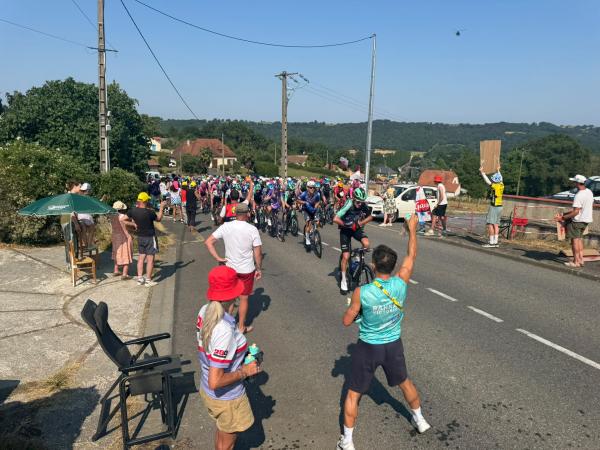
July 14 is France’s national holiday, and it carries real tactical weight inside the peloton, not just symbolic significance. French riders have a well-documented tendency to fight unusually hard to make the day’s breakaway on Bastille Day specifically, motivated by the chance to win or simply animate the race in front of the biggest home audience of the year. This isn’t a guarantee of a French stage win, but it does typically mean a more aggressive, more contested fight for the breakaway in the stage’s opening kilometres than a comparable stage on any other date — a detail that shapes the racing long before the Puy Mary even comes into view.
Coming Off the Rest Day: Fresh Legs or Rusty Legs?
The first stage after a rest day is notoriously unpredictable. Some riders return refreshed, with three weeks of accumulated fatigue genuinely reduced by 24 hours of recovery. Others find their legs strangely heavy, a phenomenon experienced riders and team staff have long described anecdotally, attributed to the body’s rhythm being disrupted by a sudden change in routine. There’s no reliable way to predict which effect will dominate for any given rider until the racing itself provides the answer, which makes Stage 10’s already-demanding profile an even less predictable day than its climb data alone would suggest.
The Lacapelle-del-Fraisse Intermediate Sprint
The day’s single intermediate sprint comes early, at Lacapelle-del-Fraisse, kilometre 25.5, well within the stage’s gentle opening section. Given how far this sprint sits from the day’s real difficulty, expect minimal tactical cost for teams contesting it, with green jersey calculations here largely uncomplicated by the climbing still to come.
2024 Revisited: The Vingegaard-Pogačar Duel at Le Lioran
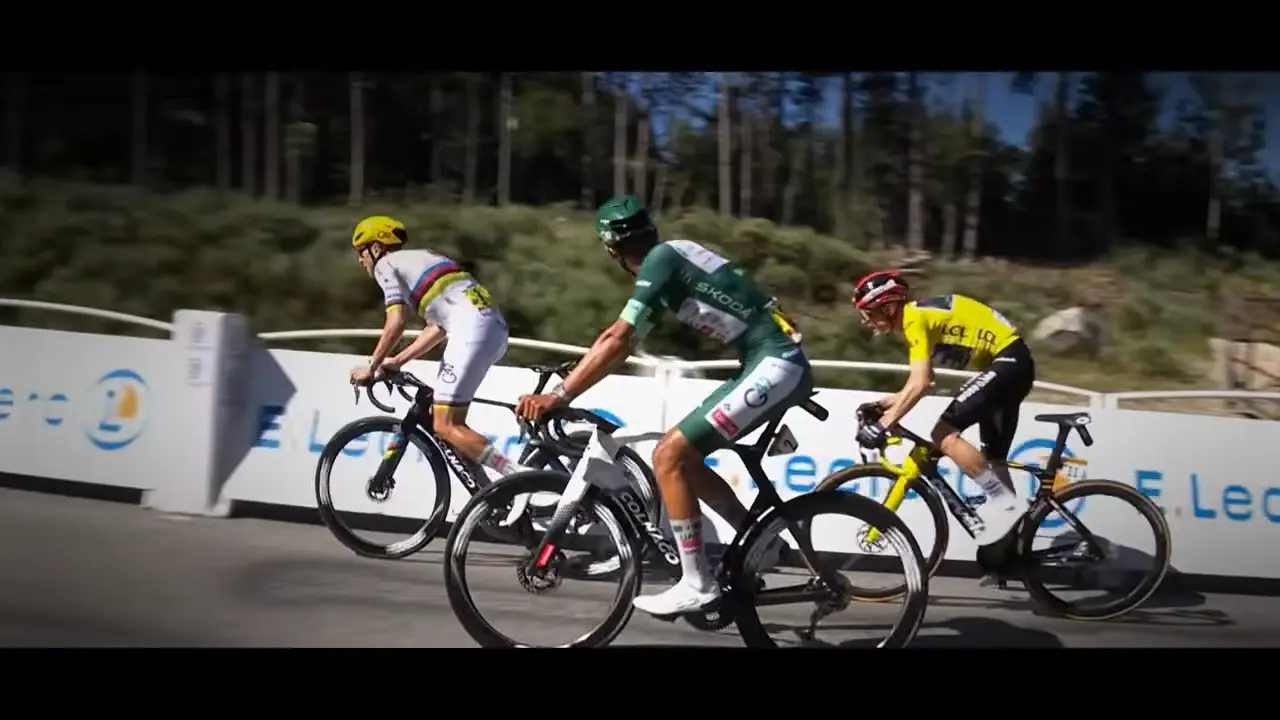
Le Lioran’s place in recent Tour history deserves an accurate retelling, since it’s easy to blur with Aurillac’s own separate history. In 2024, Jonas Vingegaard produced one of the most emotional victories of his career at Le Lioran — but that stage, Stage 11 of the 2024 Tour, started over 200 kilometres away in Évaux-les-Bains, an entirely different route from the 2026 edition’s Aurillac departure. Vingegaard caught Pogačar on the Col de Pertus and the pair arrived together with Remco Evenepoel also in the finishing move, with Vingegaard taking the sprint, which was the last time Vingegaard has beaten Pogačar at the Tour de France.
The two riders crossing the Puy Mary and Pertus together in 2026 will be racing the same iconic climbs, even though the route that leads into them is entirely new. Can it happen again?
The 2026 Prediction: Why Pogačar, Not a Rematch, Is the Smart Pick
Two years ago this exact finish town produced the sport’s most-replayed comeback of the season. It’s tempting to hope for a repeat. The current form of the race says otherwise.
Tadej Pogačar arrives at Stage 10 with two stage wins already, off the back of a Tourmalet performance so dominant that it’s already being discussed as the day that effectively decided this Tour, not just beating Vingegaard on the climb, but extending the gap further on the descent, a skill gap that isn’t going to close between Bastille Day and Paris. Vingegaard’s own team has been managing him cautiously since, ruling out early attacks and playing for stage-by-stage survival rather than another all-in gamble.

That doesn’t mean Le Lioran is a formality. It means the far more interesting story isn’t “can Vingegaard repeat 2024”, it’s whether Isaac del Toro gets freedom from UAE to contest the win himself. He’s the one rider realistically positioned to beat Pogačar to the line, precisely because he’s on the same team and doesn’t have to attack against him. If the UAE wants to protect Pogačar’s legs before the Alps while still taking the stage, sending del Toro up the road on the Puy Mary or Pertus is the logical move, and it would hand del Toro a genuinely prestigious Bastille Day win.
The pick: Tadej Pogačar wins Stage 10, either outright or by riding shotgun for a del Toro victory
If a GC selection does form on the Pertus, watch for Richard Carapaz and Paul Seixas as the riders most likely to animate it from outside the top three; both have exactly the punchy, repeated-effort profile this terrain rewards. A long-range breakaway winner remains possible (Lennert Van Eetvelt, Ben O’Connor, and Thymen Arensman all fit that mould), but with Bastille Day pulling French eyes to the TV and the GC picture this settled, the higher-probability outcome is a GC-group finish rather than a break surviving to the line.
GC Impact: A Real Test, But the Gaps Are Already Set
Stage 10 does carry genuine GC weight, the Puy Mary–Pertus sequence is exactly the kind of terrain that produces separation, but it’s arriving into a race that already has a clear hierarchy. Pogačar leads Vingegaard by 2:42, with del Toro at +3:27, Evenepoel at +3:30, and Ayuso, Seixas, and Lipowitz packed tightly behind them. None of that changed on Stage 9.
What Stage 10 can realistically do is extend gaps rather than reshuffle order. A short, sharp acceleration from Pogačar on the Pertus, in the mould of his Tourmalet move, wouldn’t need to be a long-range raid to hurt rivals; it only needs a small group to be reduced enough that a burst near the top creates real seconds. For Vingegaard, the calculation is different: he needs to test UAE’s depth before the Alps arrive, and the Pertus, steep and late, is the obvious pressure point to try it, even if a repeat of the 2024 comeback looks unlikely given current form.
Le Lioran and the Volcanoes of the Cantal
The Cantal: Europe’s Largest Stratovolcano
The mountains Stage 10 climbs through aren’t just scenic, they’re geologically extraordinary. The Cantal massif is widely recognised as the largest stratovolcano in Europe, with a base diameter of roughly 70 kilometres and a surface area of around 2,700 square kilometres, formed through volcanic activity between roughly 13 and 3 million years ago. Puy Mary itself, the climb’s namesake peak, is a remnant of that ancient volcanic structure, its now-iconic pyramidal silhouette the product of millions of years of glacial erosion carving away at what was once a far taller, more conventionally volcano-shaped mountain. The radiating valleys visible from the summit, there are seven in total around the Puy Mary site alone, are glacial in origin, carved during the last Ice Age into the volcanic rock left behind by the Cantal’s eruptions. Few of the Tour’s mountain stages cross terrain with this kind of genuine geological pedigree.
Food and Culture Along the Stage 10 Route
Stage 10 rides directly through one of France’s most distinctive cheese-producing regions, and the connection is about as literal as it gets: Cantal cheese, one of France’s oldest AOC-protected cheeses, takes its name directly from this exact department. Produced from the milk of cattle grazing the volcanic plateaus the route climbs through, Cantal is a firm, semi-hard cheese with a flavour that deepens with age, traditionally used in regional dishes like truffade, a hearty dish of fried potatoes melted together with cheese, a classic of Auvergne mountain cuisine eaten at traditional shelters called burons that dot the high plateaus. For a stage that spends most of its second half grinding through the exact landscape that produces one of France’s most beloved regional cheeses, this is a food-and-culture connection almost too perfect to invent.
Where to Watch Tour de France 2026 Stage 10: Best Spectator Spots from Aurillac to Le Lioran
Stage 10 offers some of the most dramatic mountain spectating of the Tour’s opening fortnight, with the Puy Mary site in particular drawing serious crowds given its fame and accessibility.
Stage 10 Best Viewing Zones
| Zone | What You’ll See | Access | Best Arrival | Crowd Level |
|---|---|---|---|---|
| Aurillac start | Stage Village, Bastille Day atmosphere | Easy — city centre | Morning of | Light–moderate |
| Puy Mary-Pas de Peyrol | Category 1 climb, likely GC action, volcanic scenery | Moderate — mountain road, can close early | Early afternoon, arrive well ahead | Heavy — one of the route’s most popular viewing points |
| Col de Pertus | Steepest test of the day, potential decisive moves | Moderate — narrow mountain road | Mid-afternoon | Moderate–heavy |
| Le Lioran finish | Uphill finish, GC reckoning, ski-station infrastructure | Easy — established resort town | Arrive early for a good spot | Heaviest of the stage |
Getting There and Road Closures
Aurillac has its own regional airport and reasonable rail connectivity via SNCF, making it a practical access point for the start. Le Lioran, as an established ski resort, has solid road infrastructure for a mountain finish town, though access to climb-side viewing points like Puy Mary will require significant advance planning, given the narrow mountain roads and the climb’s popularity even outside Tour years. Expect road closures on the Puy Mary and Pertus sections to begin well ahead of the peloton’s passage, with the steepest and most popular viewing areas closing earliest, given anticipated crowd volume.
Where to Stay: Aurillac, Murat, or Le Lioran?
Aurillac offers the most accommodation near the start with solid transport links. Murat, sitting roughly midway along the route near several of the day’s climbs, makes a strong base for visitors wanting to combine watching the race with exploring the Cantal’s volcanic landscape beyond just race day. Le Lioran itself, as a functioning ski resort, has meaningful accommodation capacity for a mountain finish town, though summer rooms can book out given the area’s hiking and outdoor tourism popularity, independent of the Tour.
Weather on Stage 10
Mid-July in the Cantal typically brings warm conditions in the valleys, with temperatures dropping meaningfully at altitude on climbs like Puy Mary and Pertus, both comfortably above 1,500 metres. The Massif Central’s volcanic terrain can produce localised, sometimes sudden afternoon weather changes, particularly around the higher passes — a detail regional hiking guides note as a genuine safety consideration even outside race conditions. Riders descending technical sections like the eight-kilometre drop from Puy Mary will be watching conditions closely, since a wet descent on terrain this technical carries real risk independent of the climbing itself.
How Stage 10 Connects to the Rest of the Tour
Stage 10 sits at the start of a stretch that continues testing the Massif Central’s climbers before the race eventually turns toward the Pyrenees and Alps in its second half. The riders who manage the uncertainty of returning from Rest Day 1 most effectively, whether they emerge fresh or rusty, set the tone for how the rest of this demanding middle stretch of the Tour is likely to play out, making Stage 10 as much a psychological test as a physical one.
Related Stage Guides: