Tour de France 2026 Stage 21: Wildfires Reshape the Finale, But Not the Coronation
Last updated: 8:58 am CEST - Sunday, 26 July 2026
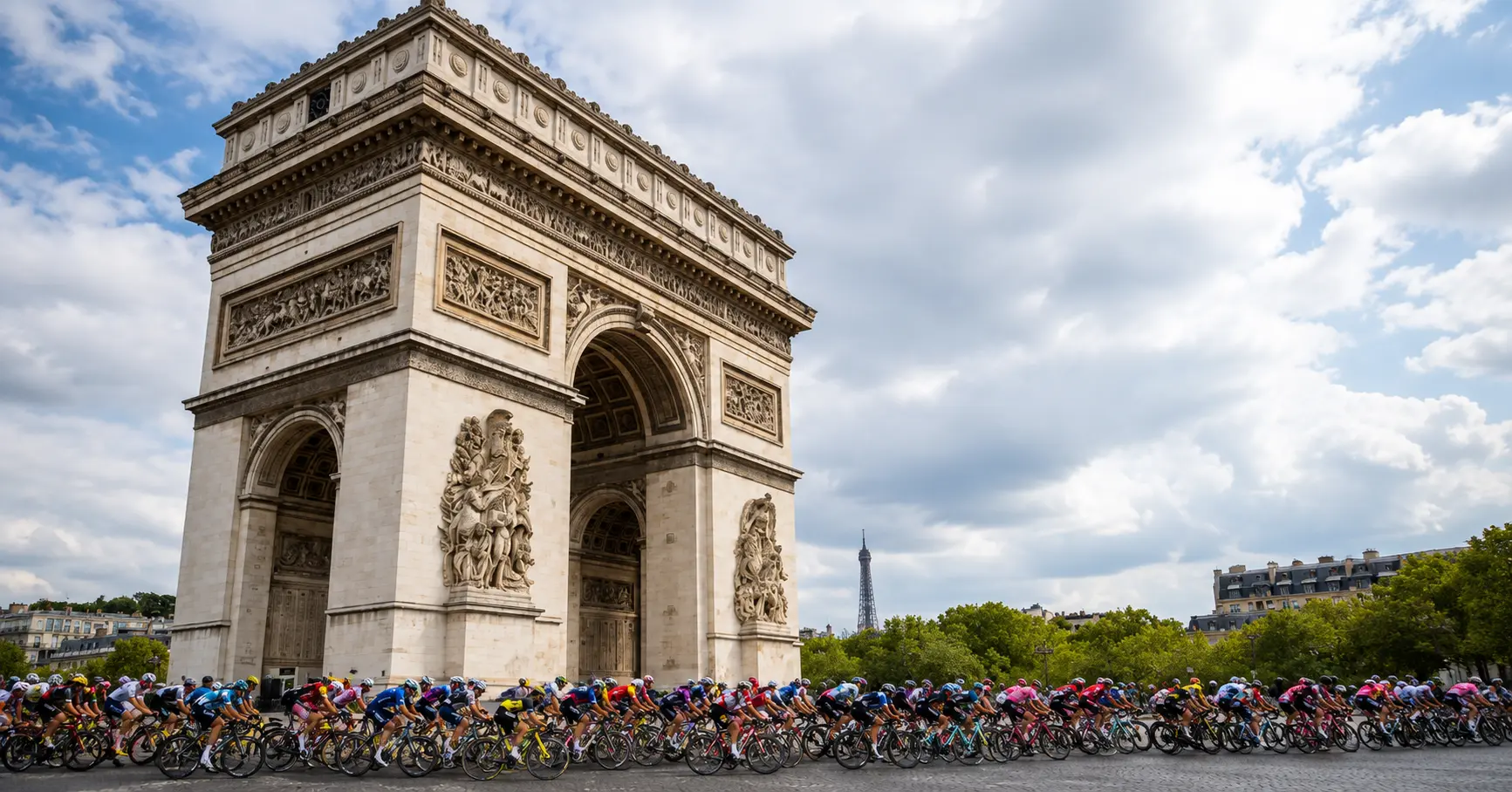
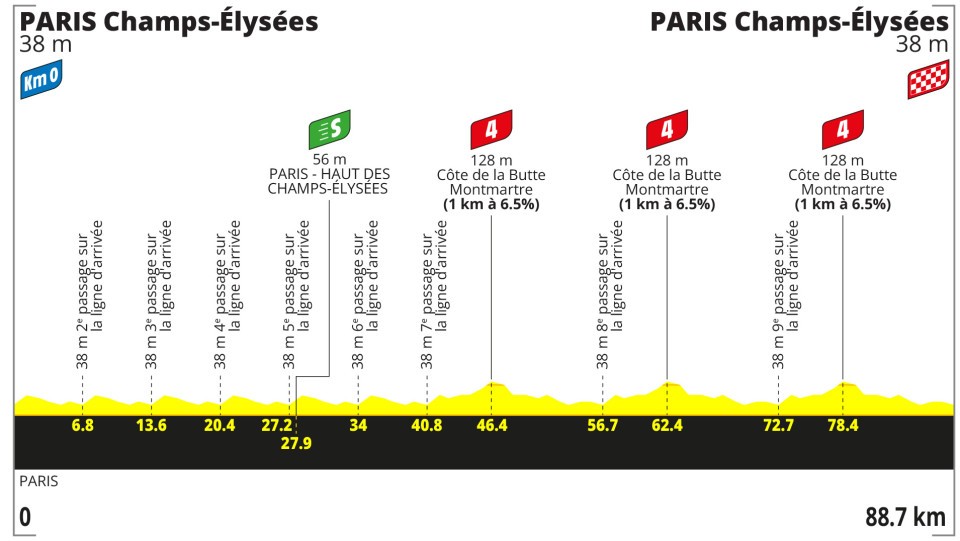
Stage 21 of the Tour de France 2026 will not be the stage anyone planned for. The final day into Paris has been cut from 133 kilometres to 89, and the traditional start in Thoiry has been abandoned entirely for racing purposes, after wildfires tearing through the Gironde and Landes regions forced police to redeploy security resources away from the Tour’s finale. Riders will still gather in Thoiry for the team presentation — but from there, they’ll board buses into Paris and start the actual race fresh on the Champs-Élysées, adding two extra laps of the famous avenue before joining the Montmartre circuit exactly as originally planned.
None of this changes what today actually means. Tadej Pogačar sealed his fifth Tour de France title on Saturday, riding the entire Queen Stage as a domestique for teammate Isaac del Toro rather than chasing a stage win of his own, the kind of quiet, controlled performance that finishes a Tour rather than headlines it. That result places him alongside Jacques Anquetil, Eddy Merckx, Bernard Hinault, and Miguel Induráin in the only club that’s ever mattered in this sport. Today in Paris is his coronation. It just arrives 44 kilometres shorter than expected, and by a route nobody had drawn up a week ago.
TL;DR
- What is Stage 21 now? An 89km stage entirely within Paris, cut down from the original 133km Thoiry-to-Paris route. Riders still attend the team presentation in Thoiry before being bussed into the capital to start the actual racing. Two extra laps of the Champs-Élysées have been added; all three ascents of the Montmartre circuit remain unchanged.
- Why did it change? Wildfires in the Gironde (Arcachon Bay area) and Landes have burned more than 36,000 hectares and forced thousands of evacuations. Police and security resources originally assigned to the Tour’s finale have been redeployed to fight the fires, prompting ASO and the Prefecture of Police to shorten and relocate the stage.
- What’s already decided? Tadej Pogačar’s fifth Tour title, sealed on Stage 20. Isaac del Toro held off Paul Seixas by 24 seconds to secure third overall and the white jersey. Richard Carapaz won the King of the Mountains jersey and two stages. Mads Pedersen sealed green. The stage win in Paris, however, remains a completely open contest.
Stage 21 key facts
| Detail | Confirmed data (revised route) |
|---|---|
| Stage number | 21 of 21 — Grand Finale |
| Date | Sunday, 26 July 2026 |
| Original route | Thoiry → Paris, 133km (cancelled) |
| Revised route | Starts on the Champs-Élysées, 89km entirely within Paris |
| Reason for change | Police/security forces redeployed to fight wildfires in Gironde and Landes |
| Thoiry’s role today | Team presentation only — riders then travel to Paris by bus |
| Unchanged | Three ascents of the Montmartre cobbled circuit (16.7km loop each) |
| Added | Two extra laps of the Champs-Élysées to partly offset the lost distance |
| Est. finish | ~19:45 CEST |
Why the final stage got shorter, in full
Wildfires have been burning across southwest France in the days leading into this final weekend, concentrated around Arcachon Bay in the Gironde and near Biscarrosse in the Landes. More than 36,000 hectares of wooded land have been destroyed, and thousands of people have been evacuated from affected areas, many of them from popular tourist spots caught in the path of the fires.
A joint statement from the Prefecture of Police and ASO, the Tour’s organisers, explained the decision plainly: “As numerous wildfires are currently affecting France, particularly the Gironde region, emergency services are fully mobilised to combat the blazes, while internal security forces are working to secure the affected areas and protect the population. In light of this, the Ministry of Interior has decided to redeploy a portion of the internal security forces initially mobilised to ensure security for the final stage of the Tour de France, in order to reinforce the response efforts in the areas affected by the wildfires.”
The statement closed with a note of solidarity: “In the spirit of national solidarity with the affected regions and populations, it has been decided to adjust the route of the final stage between Thoiry and Paris.” It’s the second time this exact issue has touched the 2026 Tour; wildfires and extreme heat already forced adjustments earlier in the race, back in the opening week. This time, it’s the Tour’s showpiece finale that’s been reshaped.
What actually happens now: the revised route
The team presentation goes ahead in Thoiry as planned, meaning fans who travelled out to see the riders before the finale still get that experience. From there, though, the riders don’t race the 133 kilometres back into the city. They board their team buses, travel into Paris, and the race effectively starts over — fresh, on the Champs-Élysées itself.
To make up for some of the lost distance, organisers have added two extra laps of the Champs-Élysées before the race joins its already-planned circuit. From that point, the stage proceeds exactly as designed: three full laps of the 16.7-kilometre Montmartre circuit, cobbled climb included, unchanged from the route revealed weeks ago. The first 58 kilometres of the original course, the rural run from Thoiry through the Yvelines countryside, simply don’t happen this year.
Pogačar’s fifth title is sealed — here’s how it happened
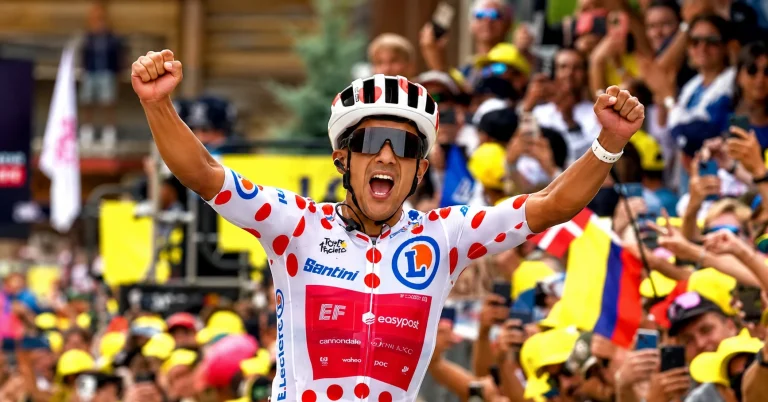
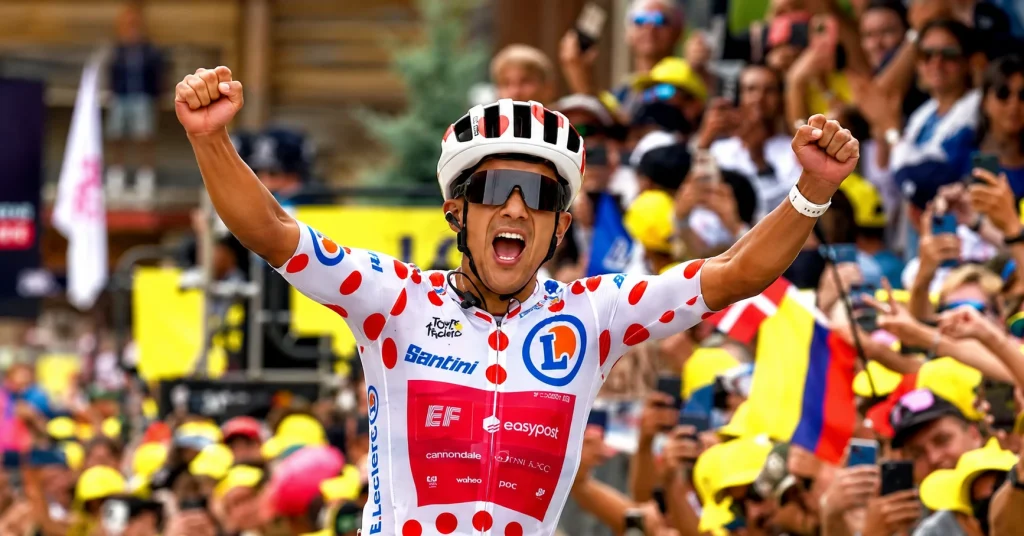
Stage 20, the Tour’s Queen Stage, delivered its result a day before Paris got to see it. Richard Carapaz won the stage, his second victory of this Tour, after Stage 18, overtaking Sepp Kuss on the final descent after the American suffered two separate crashes in the closing kilometres, the second of them on a technical section of the descent that had already claimed one earlier fall. Carapaz’s day also mathematically sealed the King of the Mountains jersey, finishing on 156 points, comfortably clear of Pogačar’s 100 and Valentin Paret-Peintre’s 99.
Tadej Pogačar finished fourth on the stage. That result was not an accident or a sign of fading form; it was the entire point. Rather than chasing the stage win himself, Pogačar spent the closing climbs setting pace at the front of the GC group, protecting teammate Isaac del Toro’s position rather than his own glory. Del Toro, Evenepoel, Seixas, and Lenny Martínez all followed through the Galibier and onto the Col de Sarenne, where Pogačar continued to control the race, this time explicitly for del Toro rather than himself, while Paul Seixas was distanced and dropped from the podium fight entirely. Juan Ayuso’s own GC ambitions ended on the same climb.
The result of all that quiet, controlled riding: Pogačar’s overall victory was mathematically confirmed, his fifth Tour de France title, tying him with Jacques Anquetil, Eddy Merckx, Bernard Hinault, and Miguel Induráin as the only riders in the sport’s history to win five times. Mads Pedersen, meanwhile, sealed the green points jersey with an attack of his own up the Galibier that caught the day’s breakaway outright.
The white jersey battle is over: del Toro holds off Seixas
The tightest ongoing story of this Tour’s final week ended on the Col de Sarenne. Isaac del Toro had led Paul Seixas by just 24 seconds heading into Stage 20, the smallest meaningful gap left anywhere in the general classification. Seixas was dropped on the Sarenne’s steep upper slopes, and the gap that had held at 24 seconds for days finally moved decisively in del Toro’s favour. He crosses into Paris third overall and wearing the white jersey as best young rider, a result UAE Team Emirates-XRG protected as carefully as they protected Pogačar’s own lead.
Montmartre: unchanged, and still the whole ballgame for the stage win
Whatever else has been rearranged about Stage 21, the feature that actually decides who wins it hasn’t moved at all. The Côte de la Butte Montmartre, 1.1 kilometres at 5.9% up cobbled streets toward the Sacré-Cœur, is climbed three times, with the final ascent arriving 10.3 kilometres from the finish line. That’s 4.2 kilometres further from the line than the equivalent climb was positioned last year, in theory giving any rider dropped on the cobbles more room to fight back before the finish.
With the yellow jersey no longer a contest, Tour tradition holds that nobody attacks the race leader on the final stage, and Pogačar’s fifth title is treated as settled business today, Montmartre becomes the entire story of the afternoon. It’s a genuine, wide-open fight between sprinters hoping to survive three trips up a cobbled hill and puncheurs built for exactly this kind of racing.
2025’s ghost: the day Van Aert dropped Pogačar
This isn’t Montmartre’s first appearance in a Tour finale, and last year’s edition is the reason nobody’s treating the stage win as a formality. The cobbled climb was introduced in 2025, inspired directly by the reception it received during the Paris 2024 Olympic Games road race, when thousands of spectators packed its streets to watch the Games unfold. In its Tour debut, it produced a genuine shock: Wout van Aert attacked on the cobbles, and when Pogačar, wearing yellow at the time, countered, Van Aert simply rode away from him and soloed to a resounding win. Pogačar crossed the line fourth on the stage that day, missing out on what would have been a stage win, though the overall result was never in doubt — he still secured his fourth Tour de France title regardless. Today, the same climb, the same cobbles, and after a year of speculation about whether he’d want revenge, the same rider who lost that duel is racing it again.
Stage winner prediction
Top tier: Mathieu van der Poel, Mads Pedersen, and Tadej Pogačar himself lead the favourites — all three have the combination of raw power and cobbled-climb comfort that Montmartre specifically rewards, and van der Poel in particular has reportedly had this exact stage circled since the route was revealed.
Second tier: Tom Pidcock, Jasper Philipsen, Maxim Van Gils, and Mathias Vacek round out the next tier, all capable of surviving the cobbles and contesting a reduced sprint if the front group stays together.
Third tier: Magnus Cort, Jasper Stuyven, Arnaud De Lie, Paul Seixas, and Matej Mohorič complete a deep and genuinely unpredictable field.
The shortened route subtly shifts the maths in favour of the stronger climbers and puncheurs over the purest sprinters. Fewer kilometres overall means less time for anyone distanced on Montmartre’s cobbles to fight back to the front group before the finish, a small but real consequence of today’s forced route change that’s worth factoring into any prediction.
Full climb profile
| Feature | Detail |
|---|---|
| Côte du Pavé des Gardes | Removed entirely — this climb sat on the now-cancelled Thoiry approach road and does not feature in the revised 89km route |
| Côte de la Butte Montmartre (1st ascent) | 1.1km at 5.9%, cobbled |
| Côte de la Butte Montmartre (2nd ascent) | 1.1km at 5.9%, cobbled |
| Côte de la Butte Montmartre (3rd/final ascent) | 1.1km at 5.9%, cobbled — 10.3km from the finish line |
| Circuit length | 16.7km per lap, including the Montmartre climb, ridden three times |
World start times and how to watch
| Time zone | Region | Est. finish |
|---|---|---|
| CEST (UTC+2) | France, Germany, Italy | ~19:45 |
| BST (UTC+1) | United Kingdom, Ireland | ~18:45 |
| EDT (UTC-4) | New York, Miami | ~13:45 |
| CDT (UTC-5) | Chicago, Dallas | ~12:45 |
| PDT (UTC-7) | Los Angeles, Seattle | ~10:45 |
| IST (UTC+5:30) | India | ~23:15 |
| AEST (UTC+10) | Sydney, Melbourne | ~03:45 +1 |
How to watch: France Télévisions carries the stage free in France. Eurosport 1 and HBO Max cover it across the rest of Europe. UK viewers have TNT Sports. In the US, NBC Sports and Peacock carry the finale, with FloSports covering Canada and SBS broadcasting free in Australia; complete live streaming guide.
The podium ceremony and the Champs-Élysées tradition
Once the stage winner crosses the line, the day shifts from racing to ceremony. The traditional jersey presentations follow on a podium erected on the Champs-Élysées itself, yellow, green, polka dot, and white all presented in turn, with Tadej Pogačar’s fifth-title ceremony carrying obvious extra weight this year. The overall winner’s team traditionally leads a champagne toast during the race’s final laps in a normal year, though with today’s compressed, shortened format, exactly how that tradition folds into the revised schedule will likely be confirmed closer to the race itself. The closing lap of honour past the Arc de Triomphe remains the image most people associate with a Tour de France ending, regardless of how many kilometres came before it this particular year.
Equipment for cobbles and a sprint finish
Stage 21 asks riders’ equipment to do two very different jobs in the same afternoon. The Montmartre cobbles reward slightly wider tyres and lower pressures for comfort and grip on an uneven, historic surface, while the smooth tarmac of the Champs-Élysées rewards exactly the opposite setup for a flat-out sprint. Most teams split the difference with a single, compromise setup for the whole circuit — there’s no time to swap bikes between three laps of the same course.
Spectator guide — Paris and the Montmartre circuit
With Thoiry no longer part of the actual racing, anyone watching Stage 21 in person is watching entirely within Paris today. The Champs-Élysées straight remains the classic viewing spot for the sprint finish and the ceremonial atmosphere afterward. Montmartre itself is the more demanding watch, steep, cobbled, densely packed streets where crowd safety matters as much as it does at Alpe d’Huez’s Dutch Corner. Anyone planning to watch from the Montmartre climb should expect serious crowds and narrow roads, and should arrive well before the first passage of the day.
Visiting Paris for the finale
For anyone building a trip around today’s finish, the revised route doesn’t change what makes Paris worth the visit around it. The Champs-Élysées circuit runs past some of the city’s most recognisable landmarks, the Arc de Triomphe anchoring one end, the Seine crossed nearby, the Eiffel Tower visible from several points along the route. Montmartre itself, beyond its role in today’s race, remains one of Paris’s most characterful neighbourhoods, steep streets, the Sacré-Cœur basilica at its summit, and a village atmosphere that feels distinct from the grander boulevards the race spends most of its time on.
FAQ — Tour de France 2026 Stage 21
Why was Stage 21 of the Tour de France 2026 shortened?
Stage 21 was shortened from 133km to 89km after wildfires in the Gironde and Landes regions of France forced police and security services to be redeployed away from the Tour’s finale to help fight the fires and manage evacuations. The wildfires had burned more than 36,000 hectares and displaced thousands of people. Organisers described the change as an act of national solidarity with the affected regions.
What is the new route for the final stage?
The revised Stage 21 starts on the Champs-Élysées in Paris rather than in Thoiry, with two additional laps of the avenue added before the race joins the previously planned Montmartre circuit. Riders still attend the team presentation in Thoiry before travelling to Paris by bus. The three ascents of the cobbled Montmartre climb remain completely unchanged from the original route.
Has Tadej Pogačar won the 2026 Tour de France?
Yes. Tadej Pogačar secured his fifth Tour de France title on Stage 20, riding as a domestique for teammate Isaac del Toro rather than contesting the stage win himself. The result ties him with Jacques Anquetil, Eddy Merckx, Bernard Hinault, and Miguel Induráin as the only riders to win five Tour de France titles.
Who won the battle for third place and the white jersey?
Isaac del Toro secured third overall and the white jersey as best young rider, holding off Paul Seixas by 24 seconds after Seixas was dropped on the Col de Sarenne during Stage 20. It was the tightest general classification battle of the Tour’s final week.
Who won the King of the Mountains and points classifications?
Richard Carapaz sealed the King of the Mountains jersey during Stage 20, finishing with 156 points, well clear of Tadej Pogačar’s 100. Mads Pedersen secured the points (green) jersey on the same stage with an attack up the Col du Galibier that caught the day’s breakaway.
Is the Montmartre climb still part of the shortened Stage 21?
Yes. Despite the overall distance being cut from 133km to 89km, all three ascents of the Côte de la Butte Montmartre remain in the route exactly as originally planned, including the final climb 10.3 kilometres from the finish. It is the part of the stage that was removed entirely, was the rural approach road from Thoiry.
What happened the last time the Tour de France finished on Montmartre?
In 2025, Montmartre’s Tour debut produced a major shock when Wout van Aert attacked on the cobbled climb and countered a response from race leader Tadej Pogačar, riding away solo to win the stage. Pogačar finished fourth that day but still secured his fourth overall Tour title regardless of the stage result.
Why is this the second time wildfires have affected the 2026 Tour de France?
Wildfires and extreme heat had already forced route adjustments earlier in the 2026 Tour, before recurring in the race’s final week and forcing the Stage 21 shortening. The recurrence highlights how repeatedly this year’s race has had to adapt to weather-related disruption across the three weeks of racing.
What time does Stage 21 finish?
Despite the shortened distance, Stage 21 is still expected to finish at approximately the traditional time of around 19:45 CEST, with the extra Champs-Élysées laps added partly to preserve a broadly similar overall stage duration and finishing window for broadcast purposes.
Is the yellow jersey still being contested on the final stage?
No. Tour de France tradition holds that the yellow jersey is not attacked on the final stage once the overall result is effectively decided, and Tadej Pogačar’s fifth title, sealed on Stage 20, is treated as settled. The stage win itself, however, remains a fully open and genuine contest among the sprinters and puncheurs in the field.