Tour de France Femmes 2026 Stage 4: The Time Trial That Could End the Fairytale
Updated: 5:45 am CEST - Tuesday, 4 August 2026
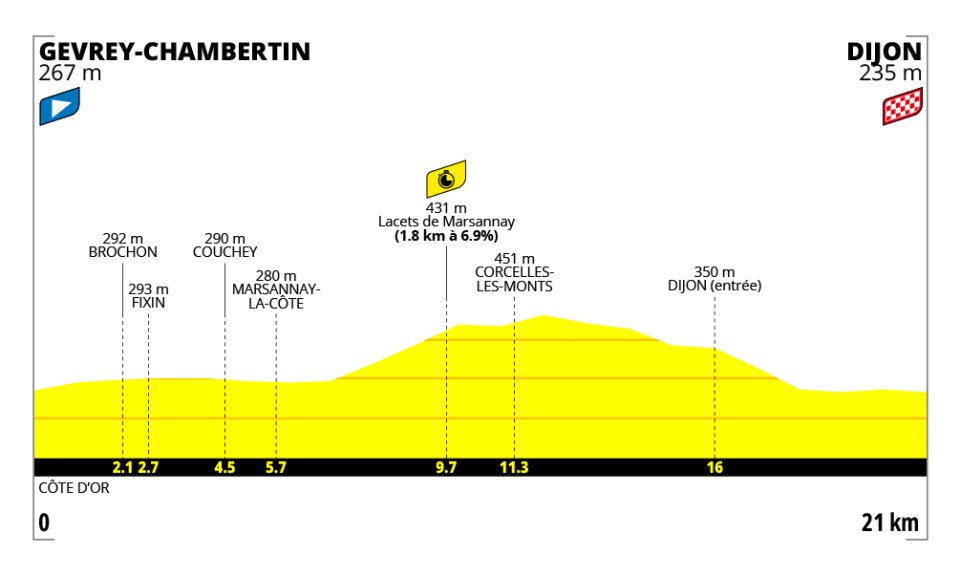
Stage 4 of the Tour de France Femmes 2026 is a 21-kilometre individual time trial from Gevrey-Chambertin to Dijon on Tuesday 4 August, carrying one real climb, the Lacets de Marsannay, 1.8 kilometres at 6.9% through three tight hairpins — before a fast descent and flat run to the finish. The first rider rolls off the start ramp at 14:34 CEST, with the final rider expected home around 17:55.
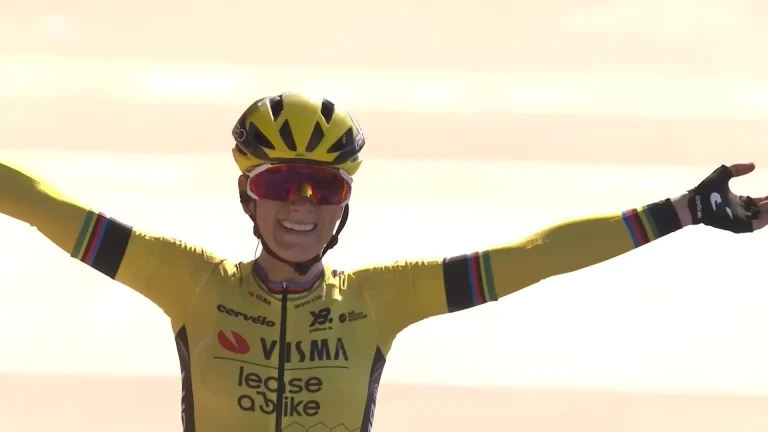
Twenty-four hours ago, Sigrid Ytterhus Haugset was a rider almost nobody had marked as a genuine threat to the overall classification. Then Lorena Wiebes got dropped early on the hard start out of Geneva, Haugset rode away alone in search of mountain points, and by the time anyone caught up to what was happening, she’d soloed roughly 88 kilometres to win the stage and seize the yellow jersey by over two minutes. Today, that fairytale meets the one discipline it was never built to survive: a time trial, against the reigning world champion in the event, who has spent the last three days conserving herself for exactly this afternoon.
TL;DR
- What is Stage 4? A 21km individual time trial from Gevrey-Chambertin to Dijon, with one significant climb — the Lacets de Marsannay — roughly halfway through the course before a fast descent and flat finish.
- What just happened? Sigrid Ytterhus Haugset produced one of the biggest shocks of the season, soloing away for nearly 90 kilometres to win Stage 3 and take the race lead by 2:02 over Kim Le Court-Pienaar, after Lorena Wiebes was dropped early in the stage.
- Why does today matter so much? Marlen Reusser, the reigning world time trial champion, rode Stages 2 and 3 conservatively and sits fresh at roughly 2:30 back. A time trial of this length is exactly the terrain where she’s historically taken over a minute out of climbers — meaning Haugset’s lead is facing its first real threat.
TDF Femmes 2026 Stage 4 key facts
| Detail | Confirmed data |
|---|---|
| Stage number | 4 of 9 — Individual Time Trial |
| Date | Tuesday, 4 August 2026 |
| Start | Gevrey-Chambertin — Place des Marronniers |
| Finish | Dijon — Avenue du Général-de-Gaulle |
| Distance | 21 km |
| Elevation gain | ~255m |
| First rider starts | 14:34 CEST |
| Last rider finishes | ~17:55 CEST |
| Intermediate check | Lacets de Marsannay, km 9.7 |
| Highest point | Corcelles-les-Monts, 451m, ~km 12 |
How Stage 3 rewrote the entire race
Nobody was talking about Sigrid Ytterhus Haugset as a GC contender before Monday. She started Stage 3 sitting 1:14 down on race leader Lorena Wiebes, a result of her position after two sprint-heavy days rather than any signal she belonged near the top of the standings. Then the stage out of Geneva turned difficult early, and Wiebes, the dominant sprinter of the race’s opening two days, was dropped before the terrain had even reached its hardest point.
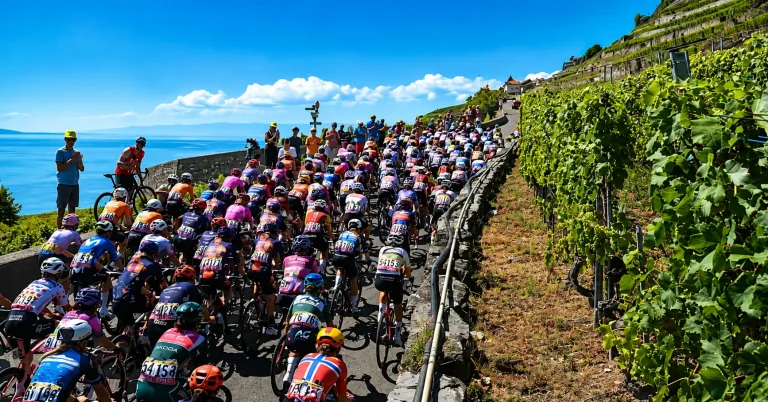
Haugset attacked on the Col de la Savine chasing mountain classification points, not necessarily the overall race lead. The gap simply never came back. Lotte Kopecky produced one of the rides of her career trying to close it, dragging the gap down from over two minutes to as little as ten seconds at one stage, but Haugset held on and crossed the line in Poligny alone, 1 minute 24 seconds clear. Marianne Vos won the sprint from the chasing group for third, 2 minutes 48 seconds back, picking up four bonus seconds in the process. Once the bonuses were applied, Haugset’s overnight deficit turned into a 2-minute 2-second lead over Kim Le Court-Pienaar, with Demi Vollering third at 2:06. Stage 3 complete rankings.
It’s the kind of result that changes how an entire race gets read. Haugset now wears yellow. Whether she keeps it depends enormously on what happens today.
Reusser’s perfect waiting game
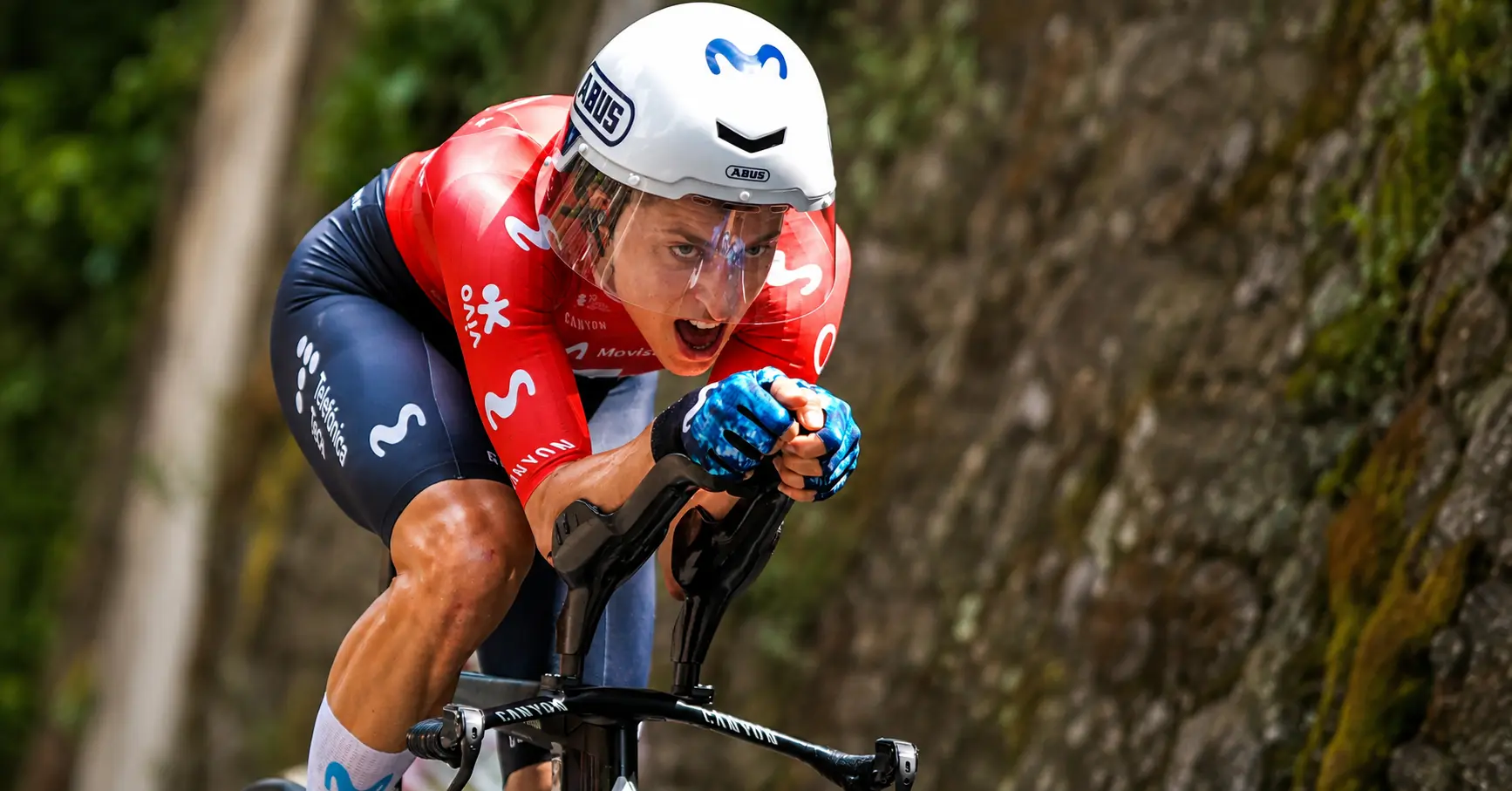
While the rest of the race reacted to Haugset’s move, Marlen Reusser did something quieter and, in hindsight, considerably smarter. Movistar’s own account of her opening three days is telling: she came through Stages 2 and 3 without any obvious physical issue and specifically avoided unnecessary work during the tactical racing into Poligny. She currently sits around 2:30 back overall, not because she lacks the legs to be higher, but because she never spent effort she didn’t need to spend.
That matters enormously today. Reusser is the reigning world time trial champion, and this isn’t her first time facing a course of this length and shape. In a similarly structured 21-kilometre test back in 2023, she took only 10 seconds out of Demi Vollering, but a full 1 minute 22 seconds out of Kasia Niewiadoma-Phinney over the same distance. That’s not a marginal gap. That’s the kind of time that can completely reorder a general classification in one afternoon, and it’s exactly the swing several of today’s GC contenders now have to reckon with.
She doesn’t need to take the yellow jersey outright for today to be a triumph. Moving ahead of Le Court-Pienaar, Ferrand-Prévot, Niewiadoma-Phinney, and Longo Borghini on the road would, on its own, fundamentally shift the tactical picture of this Tour heading toward its hardest terrain later in the race.
The route: flat, then one real climb, then fast to the line
The stage starts at the Place des Marronniers in Gevrey-Chambertin and stays flat for roughly the first eight kilometres, running through Côte d’Or vineyard country before the terrain changes character entirely.
Lacets de Marsannay — the climb that decides who suffers
1.8km | 6.9% average | 3 hairpins | intermediate check at km 9.7
This is the stage’s single defining feature, officially measured as 1.8 kilometres at 6.9% through three tight switchbacks, with the intermediate time check positioned right at its base. Some route analyses describe the true climbing effort as extending closer to three kilometres at a gentler average, once the road first begins tilting upward is factored in, a distinction that matters for pacing, since a rider who commits fully to the officially measured section risks blowing up before the gradient actually eases.
Corcelles-les-Monts and the descent to Dijon
The road keeps rising, at a considerably gentler pitch, for close to another kilometre beyond the timing check, reaching the stage’s highest point at Corcelles-les-Monts, 451 metres above sea level. From there, a fast, largely straight descent of six to nine kilometres carries riders back down toward Dijon, rewarding whoever managed their effort on the climb rather than whoever simply produced the most raw power. The final three kilometres flatten out completely, with three corners inside the penultimate kilometre and a roundabout-style turn onto the Avenue du Général-de-Gaulle just 500 metres from the finish line.
Full verified climb profile
| Feature | Distance | Avg gradient | Notes |
|---|---|---|---|
| Flat opening | ~8km | — | Through Côte d’Or vineyards |
| Lacets de Marsannay | 1.8km | 6.9% | Three hairpins, intermediate check at km 9.7 |
| Continued climb to Corcelles-les-Monts | ~1km | Gentler | Stage’s highest point, 451m |
| Descent to Dijon | 6–9km | — | Fast, largely straight |
| Flat run-in | ~3km | — | Three corners in penultimate km |
Stage winner and GC prediction
Marlen Reusser enters as the clear favourite, both on pure form as reigning world time trial champion and on the tactical logic of how she’s ridden the opening three stages. Zoe Bäckstedt, the U23 time trial world champion, and Anna van der Breggen represent the strongest challenge to her outright stage win. Demi Vollering, historically one of the few climbers capable of limiting her losses against Reusser specifically, looks the best-placed GC rider to avoid a damaging result today.
Pauline Ferrand-Prévot faces a harder task. She has been open about not having ridden a time trial since May 2025, and a course with this much elevation change and technical demand is a difficult reintroduction to the discipline. Kasia Niewiadoma-Phinney’s own history against Reusser over similar distances suggests she’s the GC rider with the most to lose today. Antonia Niedermaier, Paula Blasi, Elisa Longo Borghini, Lotte Kopecky, Mischa Bredewold, and Femke de Vries round out a field capable of a surprise result on the day.
For Sigrid Haugset, today is about damage limitation rather than winning. Her Stage 3 heroics proved she can ride alone and suffer better than almost anyone in the race, a very different skill from producing a sustained, technically precise effort against the watch. How much time she loses, not whether she loses time, is the real question hanging over her yellow jersey this afternoon.
Equipment and technical notes
Several riders have used the build-up to this time trial to work specifically on their setup, none more publicly than Pauline Ferrand-Prévot, who has spoken about wind tunnel testing and refining her time trial position ahead of her first appearance in the discipline since returning to road racing. The course’s blend of a genuine climb and a fast, flat finish creates a real equipment tension for every rider on the start list: an aggressive, deep-section aero setup rewards the flat sections but costs time on the Lacets de Marsannay’s steepest ramps, while a lighter, more climbing-friendly setup sacrifices speed on the parts of the course where it matters most.
World start times and how to watch
| Moment | CEST (France) | BST (UK) |
|---|---|---|
| First rider starts | 14:34 | 13:34 |
| Lacets de Marsannay check | ~15:00 | ~14:00 |
| Last rider expected | 17:55 | 16:55 |
How to watch: France Télévisions and France 2 carry the stage free in France. Spanish viewers have Teledeporte and RTVE Play free. Eurosport and HBO Max cover the race across the rest of Europe, with TNT Sports carrying UK coverage; explore the detailed live streaming guide.
Key riders to watch on the road:
| Rider | Local Start (CEST) | Why She Matters |
|---|---|---|
| Charlotte Kool | 15:07 | Sprinter testing her TT legs |
| Lorena Wiebes | 16:02 | Lost yellow yesterday, needs a marker |
| Lotte Kopecky | 16:39 | Ran herself into the ground chasing Haugset |
| Marlen Reusser | 17:08 | The course favourite — a genuine TT specialist |
| Pauline Ferrand-Prévot | 17:10 | Defending champion, needs to answer questions |
| Demi Vollering | 17:24 | Second favourite for the win today |
| Kim Le Court-Pienaar | 17:26 | Currently second overall, 2:22 back |
| Sigrid Haugset | 17:28 | Race leader, last off the ramp |
Weather on the Côte d’Or
The forecast has temperatures reaching around 34°C in Dijon by the afternoon, with light wind, mostly a tailwind on the course, force 3 on the standard wind scale. Hot, largely calm conditions like these typically favour fast times across the board, though the heat itself adds a genuine physical demand on top of an already punishing effort against the clock.
Spectator guide — Marsannay village and Place Wilson
Lacets de Marsannay-la-Côte: The best spot to see riders up close as they tackle the stage’s decisive climb, with a village atmosphere including a giant screen, animations, and refreshments running from 11:30 to 18:30.
Corcelles-les-Monts: The stage’s highest point and another strong viewing location, particularly for seeing how riders have paced themselves by the top of the climb.
Place Wilson, Dijon: The place to be for finish-line atmosphere, with a fan zone open from 10:00 to 18:00 featuring a giant screen, animations, and refreshments. Parking near the Carrousel swimming pool and Place Wilson is available for those arriving by bike.
The caravan is expected at the Lacets de Marsannay around 12:30, with the first riders following around 15:00. Several roads will close for the stage — organisers recommend arriving early regardless of where along the course you plan to watch.
Gevrey-Chambertin and Dijon — wine, mustard, and Burgundy’s identity
Gevrey-Chambertin sits at the heart of Burgundy’s most prestigious wine country, its name attached to some of the region’s finest Grand Cru vineyards, a serious pilgrimage site for wine enthusiasts long before the Tour de France Femmes ever considered starting a stage there. Dijon, the finish town and traditional capital of Bourgogne, carries its own globally recognised food identity: it’s the namesake and spiritual home of Dijon mustard, a condiment that’s carried the city’s name into kitchens worldwide regardless of whether people know the city itself.