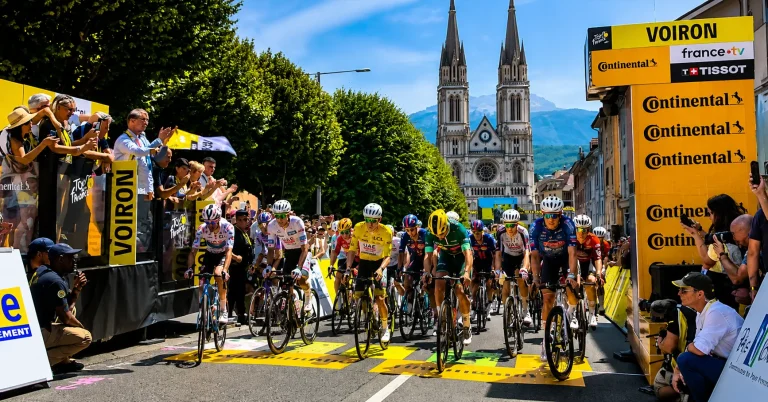

Tour de France 2026 Stage 6 Pyrenean Queen Stage: Pau to Gavarnie-Gèdre — The Tourmalet Doesn’t Care Who’s Wearing Yellow
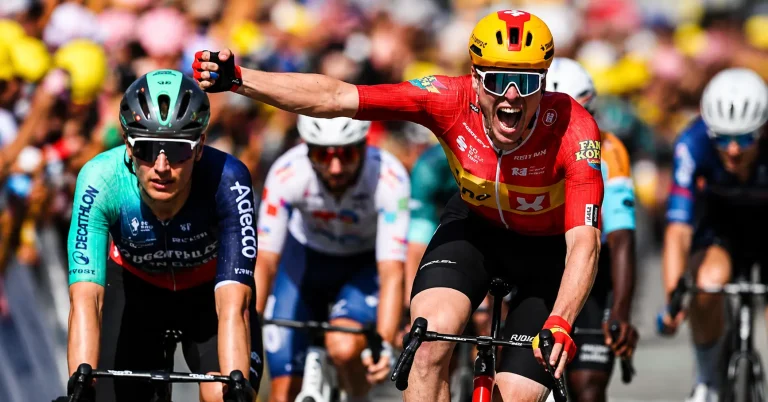
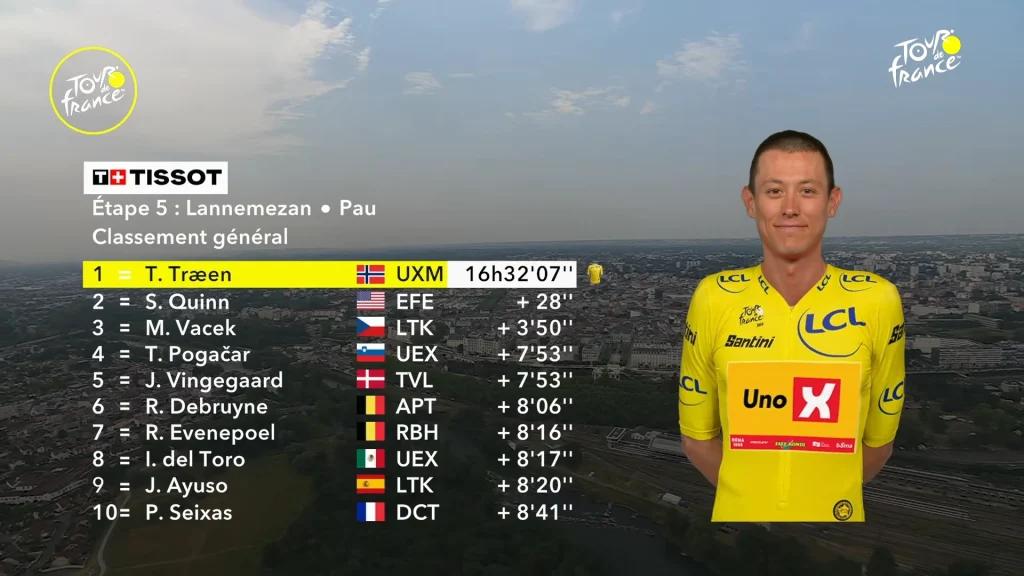
Stage 5 looked settled with 5km to go, then wasn’t. A crash just outside the safety zone split the bunch, and Olav Kooij came through the front group to win his first Tour stage, ahead of Max Kanter and Tim Merlier. It barely touched the GC picture — Pogačar, Vingegaard, Evenepoel, Seixas, and Træen all landed in the same 14-second group, still level with each other in every way that matters. Vingegaard punctured moments after crossing the line and had to jump on a teammate’s bike; nobody blinked. The story of Pau, in the end, was that nothing actually changed.
Something changes today. Stage 6 sends the race over the Col d’Aspin and then the Tourmalet, the most-used climb in Tour history, its 91st appearance, and the first time this race has touched 2,000 metres. What makes it dangerous isn’t just the climb itself; it’s the 38km that follow. Gavarnie-Gèdre reads as a gentle 4% average on paper, but paper doesn’t climb the Aspin and the Tourmalet first. Riders arriving at that final ascent with anything left will find it manageable. Riders arriving empty will find out exactly how unmanageable “gentle” can be. Træen defends yellow for the first time against a genuine mountain. Pogačar and Vingegaard, still tied on time, finally have terrain worth fighting over.
General Classification Heading Into Stage 6
TL;DR
- Stage 6 at a glance: July 9, Pau to Gavarnie-Gèdre, 186.2 km, 4,100m of climbing — the hardest stage of the Tour’s opening ten days.
- The Tourmalet at 2,115m is the highest point the race has reached in 2026 so far, and one of the most climbed mountains in Tour history.
- First-ever Tour finish at Gavarnie-Gèdre, beneath a UNESCO cirque Victor Hugo once called “the Colosseum of nature.”
- GC implications are real here — this is the first stage where genuine time gaps between Pogačar, Vingegaard, Evenepoel, and Seixas are likely to appear.
- 20.7 km separate the Tourmalet summit from the finish line — a fast descent followed by a long false-flat climb that exposes anyone running on empty.
Tour de France 2026 Stage 6 takes place on Thursday, July 9, running 186.2 km from Pau to a first-ever finish at Gavarnie-Gèdre, by way of the Col d’Aspin and the Col du Tourmalet. It is the hardest stage the Tour has raced in its first ten days, and the first day where pure climbing legs, not tactics, not a team time trial, not a bunch sprint, will decide who actually has a GC bid in 2026.
Five days of racing, two mountain crossings, a sprint, and a breakaway stage have all been building to this. The riders climb 4,100 metres across four categorised passes, including the Tourmalet’s brutal final third above 1,800m, before a deceptively gentle 18.7 km false-flat carries them into one of the most dramatic natural amphitheatres in Europe, a UNESCO World Heritage cirque the Tour has never finished at before. Stage 6 is where the 2026 Tour’s GC race actually begins.
What Is Tour de France 2026 Stage 6?
Stage 6 is a 186.2 km mountain stage run on July 9, taking riders from Pau to a brand-new finish at Gavarnie-Gèdre, with 4,100 metres of climbing across the Col d’Aspin, the Col du Tourmalet, and a long final ascent to the UNESCO-listed Cirque de Gavarnie. It is the toughest test the 2026 Tour has set in its opening week.
What separates this from the race’s earlier mountain test at Les Angles on Stage 3 is the combination, not just the altitude. Stage 3 asked riders to climb one significant mountain block. Stage 6 asks them to climb two HC- and Cat-1-rated passes back-to-back, the Aspin straight into the Tourmalet, with barely a descent between them, and then survive a 38 km finale that never lets up entirely. A queen stage, in cycling terms, is the single hardest day of a Grand Tour’s route, and in the Pyrenean portion of the 2026 Tour, this is it. The Tourmalet itself is rated hors catégorie — beyond categorisation, the sport’s designation for climbs so demanding they exceed the normal 1-through-4 scale.
Stage 6 Date, Distance, and Start Times: July 9, 2026
Riders roll out from Pau at 12:25 CEST, with the day’s caravan departing two and a half hours earlier at 10:00 CEST. The stage is expected to finish around 17:45–17:46 CEST at Gavarnie-Gèdre, though mountain stages carry real uncertainty in pacing. Official ASO timetables show the Tourmalet summit could be crossed anywhere from 14:52 to 16:58 CEST, depending on how aggressively the race is raced, with the finish window spanning 16:04 to 18:05 CEST across different pace scenarios. That’s the widest finish-time uncertainty of any stage so far in 2026, entirely normal for a day this demanding, where a controlled GC battle and an all-out breakaway produce very different average speeds.
For viewers outside continental Europe: the start falls at 11:25 BST in the UK, 06:25 EDT on the US East Coast, and 03:25 PDT on the West Coast. Coverage runs on Eurosport and GCN across Europe and in the UK. Tune in early, because a mountain stage like this rewards watching the breakaway form on the early categorised climbs, not just the finale.
Tour de France 2026 Stage 6 Route: Full Pau to Gavarnie-Gèdre Course Guide
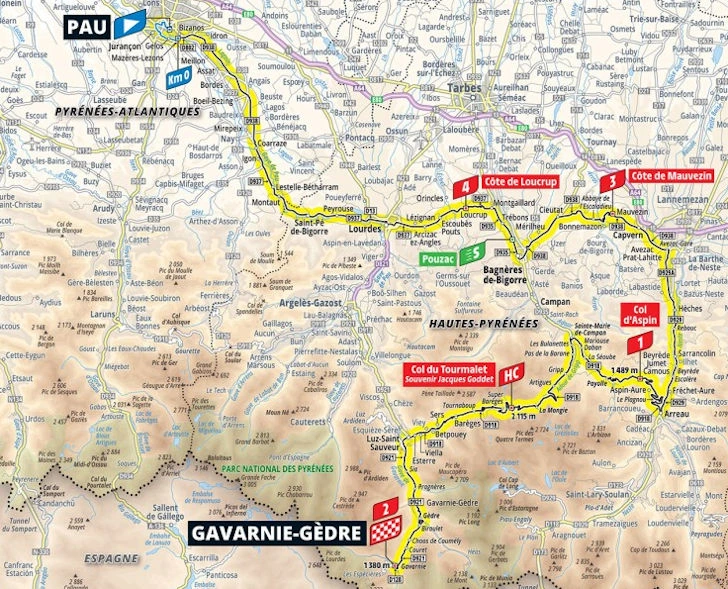
The route runs from Pau through Jurançon, Lourdes, and Bagnères-de-Bigorre to Arreau at the foot of the Col d’Aspin, then climbs the Aspin and the Tourmalet back to back before descending into Luz-Saint-Sauveur and turning south through Gèdre to the new finish at Gavarnie-Gèdre. The stage breaks into three distinct sections: a 106 km approach that looks flat on paper but isn’t, a 35 km mountain double that is the hardest continuous climbing of the Tour’s first week, and a 38 km finale combining a technical descent with a long, grinding false-flat.
The Approach: Pau to Arreau Through Lourdes — 106 km That Isn’t Flat
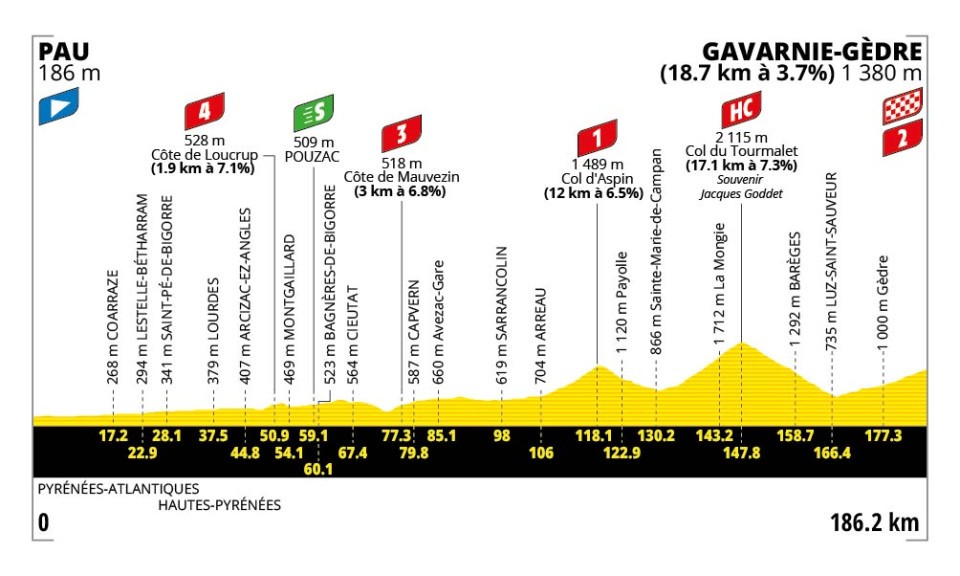
The route departs Pau through Jurançon, the wine terraces also seen from a different angle in the Stage 5 guide, before heading east through Lourdes — one of the most visited religious pilgrimage destinations on earth, drawing around 6 million visitors a year to the site of the reported 1858 Marian apparitions. The race continues through Bagnères-de-Bigorre, an established Pyrenean spa town, before two categorised climbs disrupt what would otherwise be a gentle morning: the Côte de Loucrup (Cat 4, 1.9 km at 7.1%, at the 50.9 km mark) and the Côte de Mauvezin (Cat 3, 3 km at 6.8%, at km 77.3). Both award King of the Mountains points and matter enormously for which riders make the day’s breakaway. By the time the race reaches Arreau at km 106, at the foot of the Col d’Aspin, the breakaway has typically already formed and settled into its rhythm.
The Col d’Aspin: The Pyrenees’ Most Underrated Giant
The Col d’Aspin climbs 12 km at an average gradient of 6.5%, rated Cat 1, topping out at 1,489 metres at the 118.1 km mark. The first part of the climb is relatively easy. The steepest section, a single kilometre at 9.5%, comes in the second half, after which gradients generally settle around 8% for the remainder of the ascent. The Aspin has featured in the Tour dozens of times. It rarely gets the attention of the Tourmalet that follows it, but on its own terms, it’s a serious mountain.
The descent off the Aspin into Sainte-Marie-de-Campan is fast and technical and this village carries one of cycling’s most enduring stories. In 1913, Eugène Christophe broke the fork of his bike on the Tourmalet descent and walked roughly 10 km down to a blacksmith’s forge in this same village, where he repaired the fork himself under the smith’s supervision while a 14-year-old apprentice worked the bellows. He was later penalised for accepting “outside assistance,” despite having done every bit of the actual repair work with his own hands. It’s a piece of cycling folklore every fan watching Stage 6 should know before the Aspin descent even begins.
The Col du Tourmalet: “More of the Same, Only Tougher”
Immediately after the descent into Sainte-Marie-de-Campan, the Tourmalet begins — and the climb has been described as essentially a hot-rodded version of the Aspin that just preceded it. Rated hors catégorie, the Tourmalet runs 17.1 km at an average gradient of 7.3%, summiting at 2,115 metres at the 147.8 km mark. From roughly the tenth kilometre, gradients sit consistently between 9 and 10% — the section where the climb stops being a warm-up and starts being the Tourmalet.
This is the highest paved mountain pass in the French Pyrenees and one of the most-climbed mountains in the history of the Tour, first crossed by the race in 1910. At the summit stands the Géant du Tourmalet, a giant steel silhouette of a cyclist, instantly recognisable to anyone who has followed the sport for more than a season. The climb also carries the “Souvenir Jacques Goddet” designation, a special KOM points bonus reserved only for the Tour’s most historically significant summits, named for the man who directed the race for over fifty years. La Mongie, the ski station passed on the upper slopes, gives non-cycling spectators road access by car even in midsummer, one reason this climb consistently draws some of the largest roadside crowds of any Tour mountain stage.
The Long Descent and the False-Flat Climb to Gavarnie-Gèdre
From the Tourmalet’s summit, the descent runs through Super Barèges and Barèges into Luz-Saint-Sauveur at the 166.4 km mark — fast, technical, and thoroughly familiar to the peloton from past editions. From Luz-Saint-Sauveur, the route does not retrace any previous Tourmalet road. It turns into a different valley entirely, heading toward Gèdre and Gavarnie. Gradients stay modest for much of this section, with the road running almost straight into the mountains, aside from two hairpin bends just past Gèdre. After that, the gradient increases slightly for the final approach — but it remains, on paper, relatively gentle: 18.7 km at an average of 3.7% all the way to the finish.
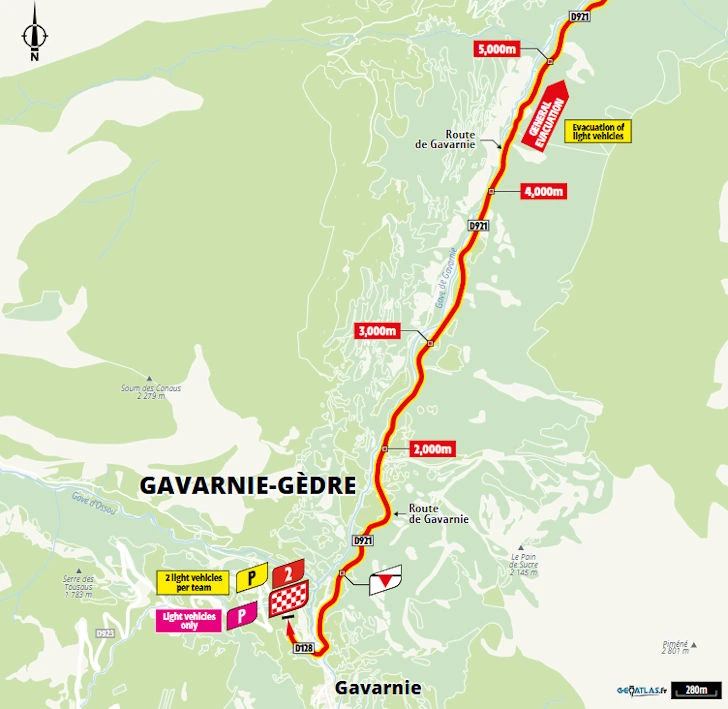
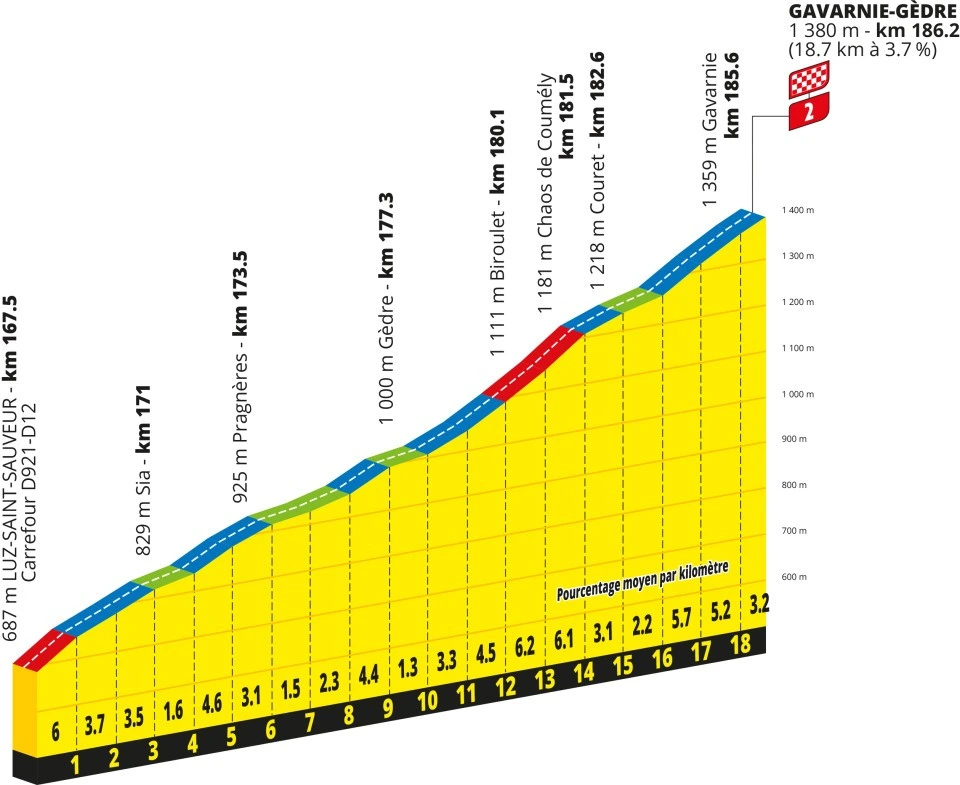
This is not a summit-finish sprint up a wall. It’s a long, grinding, deceptively difficult false-flat that punishes anyone who has nothing left in the tank after the Tourmalet, exactly the kind of finish that separates riders on fumes from riders who paced the mountain double correctly.
Tour de France 2026 Stage 6 Elevation Profile: 4,100 Metres and the Tourmalet’s Roof
Stage 6 climbs a total of roughly 4,100 metres, the most of any stage in the opening ten days of the 2026 Tour, surpassing even Stage 3’s summit finish at Les Angles. What makes the profile genuinely brutal isn’t just the total number. It’s the shape of it: the Aspin and Tourmalet sit back to back with only a short descent between them, meaning riders effectively climb 29 kilometres almost continuously before any real recovery. And the deceptively gentle 3.7% average on the final 18.7 km is dangerous precisely because it looks easy written down on a page, it is anything but easy on legs that have already spent themselves on the Tourmalet’s final third.
All Five Climbs: Stage 6 Data Table – Pau to Gavarnie-Gèdre
| Climb | Category | Length | Avg. Gradient | Summit Altitude | KM Mark | KOM Points |
|---|---|---|---|---|---|---|
| Côte de Loucrup | Cat 4 | 1.9 km | 7.1% | — | 50.9 | 1 |
| Côte de Mauvezin | Cat 3 | 3 km | 6.8% | — | 77.3 | 2-1 |
| Col d’Aspin | Cat 1 | 12 km | 6.5% | 1,489m | 118.1 | 10-8-6-4-2-1 |
| Col du Tourmalet (Souvenir Jacques Goddet) | Cat HC | 17.1 km | 7.3% | 2,115m | 147.8 | 20-15-12-10-8-6-4-2 |
| Montée de Gavarnie-Gèdre | Cat 2 | 18.7 km | 3.7% | 1,380m (finish) | 186.2 | — |
Why the Aspin-Tourmalet Double Is Harder Than Two Separate Climbs
The descent from the Aspin into Sainte-Marie-de-Campan is short — riders barely have time to recover before the Tourmalet’s lower slopes begin. Combined, the Aspin and Tourmalet add up to 29.1 km of climbing with only a brief descent breaking up the effort, totalling roughly 1,925 metres of combined ascent in that stretch alone. At altitude on the Tourmalet’s upper slopes, above 1,800 metres, oxygen availability drops meaningfully, and any rider who pushed too hard on the Aspin arrives at the Tourmalet’s brutal final third already compromised before the hardest gradients even begin. This is the section of Stage 6 where the 2026 GC race is likely to produce its first genuine time gaps.
Stage 6 Tactics: Why This Is the Tour’s First Real GC Showdown
Stage 6 is the first stage of the 2026 Tour where pure climbing ability, not team tactics, not time trial power, not a sprint train, decides who has a genuine GC case. The HC-rated Tourmalet, combined with a 38 km finale that offers no flat recovery, means the contenders cannot hide behind their teams the way they could on Stage 1’s team time trial or Stage 2’s bunch finish. This is meaningfully different from Stage 3’s summit finish at Les Angles, which asked for one hard mountain block; Stage 6 asks for two, stacked directly on top of each other.
The Breakaway Case vs. the GC Showdown
Two scenarios sit at roughly equal probability heading into the stage. In the breakaway case, the two early KOM climbs, Loucrup and Mauvezin, give a strong climbing group the chance to form early and use the Aspin to build a real gap before the Tourmalet even starts. If that group has the legs to survive the Tourmalet’s brutal final third and then pace the 18.7 km false-flat without being swallowed up, a non-GC rider takes the stage. In the GC showdown case, the historic weight of the Tourmalet and the symbolism of the first-ever Gavarnie-Gèdre finish could be enough to convince UAE or Visma to control the race fully and force a GC battle on the false-flat finale — terrain that rewards sustained power over short, explosive attacks.
What Pogačar, Vingegaard, Evenepoel, and Seixas Risk on the Tourmalet
This is the stage where the 2026 Tour’s GC hierarchy starts producing real data instead of pre-season form. Pogačar has a long history of attacking from distance on iconic climbs, and the Tourmalet’s historical weight is exactly the kind of mountain where he tends to make a statement rather than wait. Vingegaard’s decision to prioritise the Giro first faces its sternest test yet here, the Tourmalet’s sustained 9–10% gradient in the final third is precisely the terrain that exposes accumulated fatigue from a double Grand Tour campaign, if that fatigue is there at all. Evenepoel’s question mark is different: his time-trial strength has never been in doubt, but a 17.1 km HC climb at altitude tests something his TT power can’t answer for him; if he loses time here, it will be the Tourmalet that explains it, not the earlier team time trial format. And Seixas faces his first hors catégorie climb in a Grand Tour at just 19, the test every observer has been waiting for since his Tourmalet recon times on Strava made headlines before the race even started.
The Points Classification Table: How KOM and Green Jersey Points Are Won
Stage 6 carries the single largest King of the Mountains points haul of the Tour’s first week, awarded at the Tourmalet under its “Souvenir Jacques Goddet” designation. At the Côte de Loucrup, the first rider over the top earns 1 point. At the Côte de Mauvezin, it’s 2 points for first, 1 for second. The Col d’Aspin pays out 10-8-6-4-2-1 across the top six riders. The Tourmalet itself pays a maximum 20 points to the first rider over, descending 15-12-10-8-6-4-2 through seventh place — the richest single KOM haul on the route so far. At the finish line, green jersey points run 20-17-15-13-11-10-9-8-7-6-5-4-3-2-1 across the top fifteen finishers, with a polka-dot bonus of 5-3-2-1 and time bonuses of 10, 6, and 4 seconds for the top three.
The Col du Tourmalet: Cycling’s Most Mythologised Mountain
The Col du Tourmalet was first crossed by the Tour de France in 1910, making it one of the oldest and most frequently used high-mountain passes in the race’s entire history. Its weight in the sport comes from more than its altitude.
The most famous story tied to this mountain is Eugène Christophe’s in 1913: his bicycle fork broke on the Tourmalet’s descent, and rather than abandon, he walked roughly 10 km down to a forge in Sainte-Marie-de-Campan, where he repaired the fork with his own hands under the watch of the village blacksmith, whose 14-year-old apprentice worked the bellows throughout. Christophe was later given a time penalty for accepting “outside assistance,” even though every part of the actual repair was his own work. It remains one of the sport’s defining tales of stubbornness and self-reliance.
At the summit, the Géant du Tourmalet, a giant steel silhouette of a cyclist, has marked the climb for years, instantly recognisable in Tour broadcasts. The “Souvenir Jacques Goddet” designation, awarded only at the Tourmalet summit, honours the legendary race director who ran the Tour for more than five decades. Few climbs anywhere in cycling carry this density of history in a single ascent.
Gavarnie-Gèdre: The First-Ever Tour Finish at “Nature’s Colosseum”
Gavarnie-Gèdre is a Pyrenean commune in the Hautes-Pyrénées, home to the Cirque de Gavarnie, a vast glacial amphitheatre with rock walls rising as high as 1,500 metres, inscribed as a UNESCO World Heritage Site in 1997 as part of the wider Pyrénées–Mont Perdu listing. Stage 6 marks the first time in the race’s history that the Tour de France has finished here.
Victor Hugo described the cirque as “the Colosseum of nature” in his poem “Dieu,” and the description has stuck for nearly two centuries. The Gavarnie Falls, cascading roughly 422 metres into the floor of the cirque, rank as the second-highest waterfall in Europe. The site holds one of only a small number of UNESCO designations worldwide recognised for both natural and cultural significance simultaneously, a distinction it shares with places like Machu Picchu. For a Tour de France finish line, that’s an extraordinary backdrop, and one no broadcast of this race has ever shown before.
What to Do in Gavarnie-Gèdre Beyond the Finish Line
The classic walk from Gavarnie village to the base of the cirque and waterfall takes roughly 45 to 60 minutes each way on a well-marked path, manageable for most reasonably fit visitors, with the option to go on foot, by horse, or by donkey for those who’d rather not walk it. The Brèche de Roland, a dramatic 2,800-metre gap cut into the ridge above, tied to the medieval legend of Roland of Roncevaux, is visible from the cirque floor and reachable by experienced hikers willing to commit to a longer route. The Millaris museum in Gèdre offers an interactive exhibition on the cirques’ UNESCO status for visitors who want the history without the climb. The neighbouring Cirque de Troumouse and Cirque d’Estaubé, both lesser-known, are worth the extra time for anyone staying in the area more than a day. For Tour spectators planning a full day here: watch the finish, then walk to the cirque itself in the evening light, when the crowds have thinned and the rock walls catch the last sun.
Pau: Hosting the Tour for the 68th Time, Now as a Start Town
Pau serves as a Tour de France start venue for the 68th time on Stage 6, a separate, larger tally than the city’s finish-hosting count referenced in the Stage 5 guide, since Pau has welcomed the race well over 130 times combined across start and finish duties throughout Tour history. ASO frequently uses Pau as what amounts to a pivot city: a sprint finish one evening, a mountain stage start the following morning, taking full advantage of the city sitting right at the foot of the Pyrenees. For the départ experience specifically, distinct from the Stage 5 guide’s coverage of the Boulevard des Pyrénées and Château de Pau, the key logistics on the day are the Stage Village location, team bus parking, and the sign-on podium, all generally positioned in the city centre with public access in the hours before the 12:25 CEST roll-out.
Where to Watch Tour de France 2026 Stage 6: Best Spectator Spots from Pau to Gavarnie-Gèdre
Stage 6 is a genuine high-mountain logistics day for spectators, closer in difficulty to Stage 3’s Les Angles than the more accessible Stage 4 or Stage 5. Four zones stand out, ordered roughly by drama and ease of access.
Stage 6 Best Viewing Zones
| Zone | What You’ll See | Access | Best Arrival | Crowd Level |
|---|---|---|---|---|
| Pau start area | Stage Village, départ atmosphere | Easy — city centre | Morning of | Light–moderate |
| Col d’Aspin summit | First major mountain drama, Cat 1 | Accessible by car | Early afternoon | Moderate |
| Col du Tourmalet / La Mongie | Decisive HC moment, Géant statue | Road closes early morning | Before 08:00 CEST | Largest crowds of the stage |
| Gavarnie-Gèdre finish | Historic first finish, UNESCO backdrop | Very limited access | Plan to arrive the day before | Heavy, limited accommodation |
Getting There: Transport and Road Closures on Stage 6 Day
Pau is reachable by TGV, as covered in the Stage 5 guide. Gavarnie-Gèdre has no rail access of its own; the nearest station is Lourdes, served by SNCF trains from Pau, Toulouse, and Paris, followed by roughly 50 km by car or bus via Luz-Saint-Sauveur, about an hour’s drive. Mountain road closures on the Aspin and Tourmalet begin early, around 08:00 CEST, given the scale of crowds these climbs typically draw, among the most-watched ascents on the entire Tour calendar. The approach road into Gavarnie-Gèdre closes from roughly 10:00 CEST. Given the remote finish location and genuinely limited accommodation in the immediate area, day-tripping from Lourdes or Pau is the more realistic plan for most visitors rather than trying to stay overnight in Gavarnie itself.
Where to Stay for Stage 6: Pau, Lourdes, or Luz-Saint-Sauveur?
Three real options exist. Pau offers the largest hotel stock and lets you see the start, but there’s no practical same-day return route to Gavarnie afterwards. Lourdes is the practical middle base, with excellent TGV access, plenty of pilgrimage-driven accommodation, and roughly 50 km from the finish. Luz-Saint-Sauveur sits closest to the finish itself, a charming Pyrenean spa town, but rooms are genuinely limited and tend to book out months in advance given the historic nature of this first-ever Gavarnie finish. For most visitors trying to balance seeing both the start and the finish, Lourdes is the most practical base.
Weather on Stage 6: Altitude, Afternoon Storms, and the Tourmalet’s Microclimate
Pau typically starts warm in early July, around 27–28°C. At the Tourmalet’s summit, 2,115 metres up, July temperatures average just 8–12°C — a swing of nearly 20 degrees within a single stage, before the descent into Luz-Saint-Sauveur warms things back up past 20°C. The same Pyrenean afternoon thunderstorm risk noted around Stage 3’s Col du Calvaire applies here too, with even greater consequence given the technical, HC-rated descent off the Tourmalet. Fog is a regular feature of the Tourmalet’s upper slopes even in midsummer.
Gavarnie-Gèdre itself, at 1,380m, sits in a microclimate sheltered by the cirque’s walls, generally calmer than the exposed Tourmalet, though prone to its own valley cloud formation late in the afternoon. Teams will be watching the Tourmalet forecast closely in race week: a wet, technical descent at speeds approaching 80 km/h on tight hairpins is one of the most genuinely dangerous moments in the entire first week of this Tour.
How Stage 6 Sets Up the Rest of the Tour: GC Verdict and the Road to Bordeaux
Stage 6 delivers the Tour’s first genuine GC verdict and the gaps that open on the Tourmalet and the Gavarnie-Gèdre false-flat are likely to carry real weight through the rest of July. Stage 7, on July 10, runs from Hagetmau to Bordeaux, 175 km and flat, a complete tonal reset that hands the sprinters a second chance and gives GC teams a genuine recovery day after this Pyrenean block. Taken together, the cumulative picture from Barcelona’s opening team time trial through to Gavarnie-Gèdre’s false-flat finish is that the 2026 Tour’s first mountain block — Stages 1, 3, and 6 — will have delivered its verdict before the race has even reached the Massif Central.
Related Stage Guides: